


Research
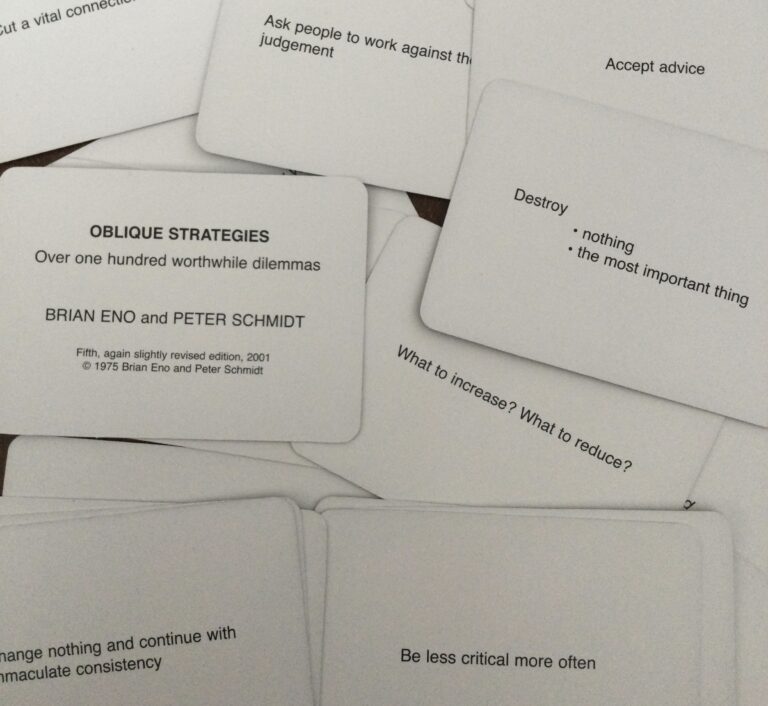
The Origin of Oblique Strategies
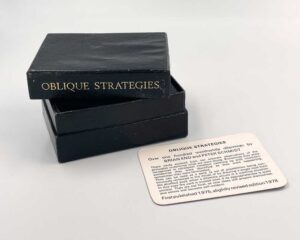
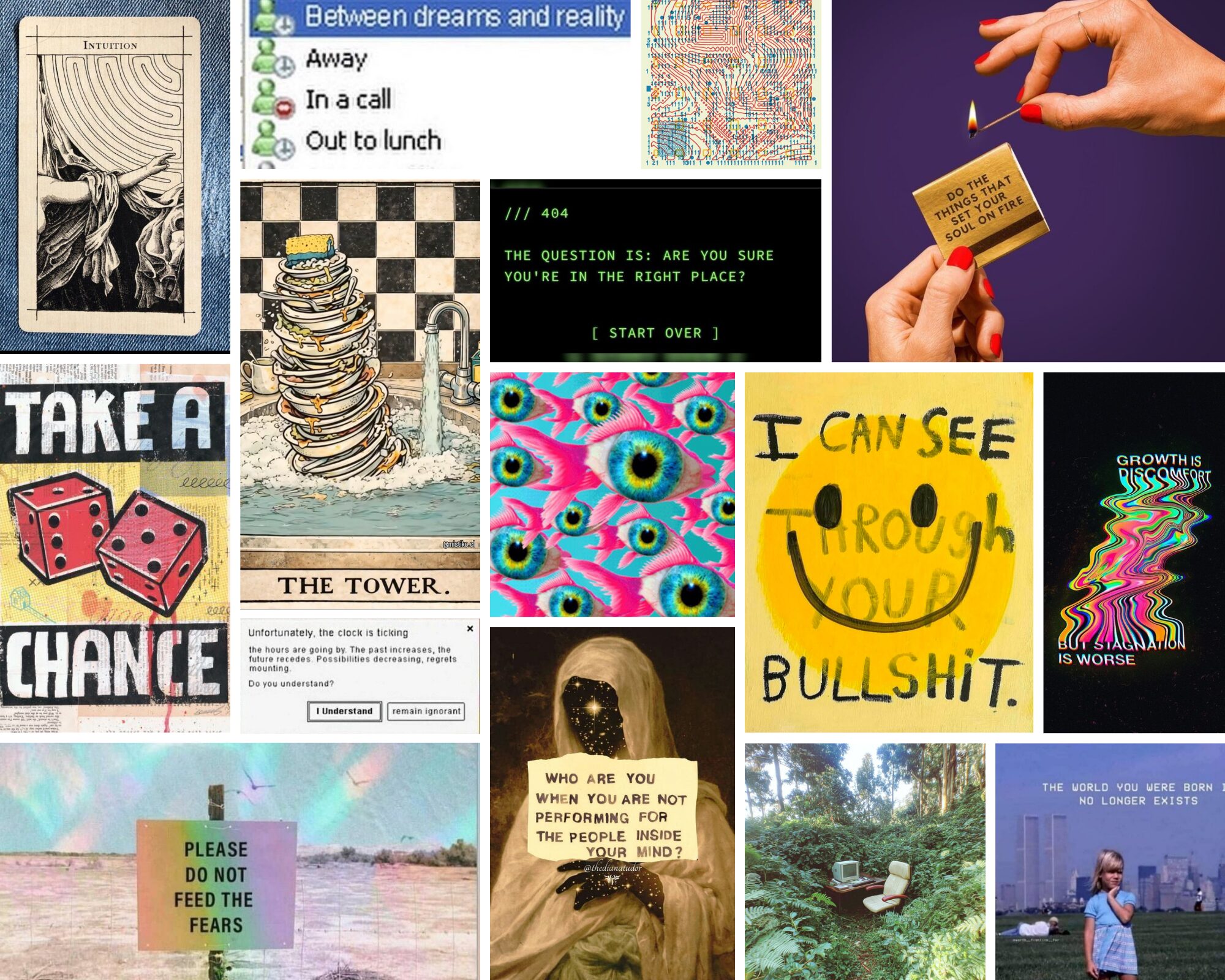
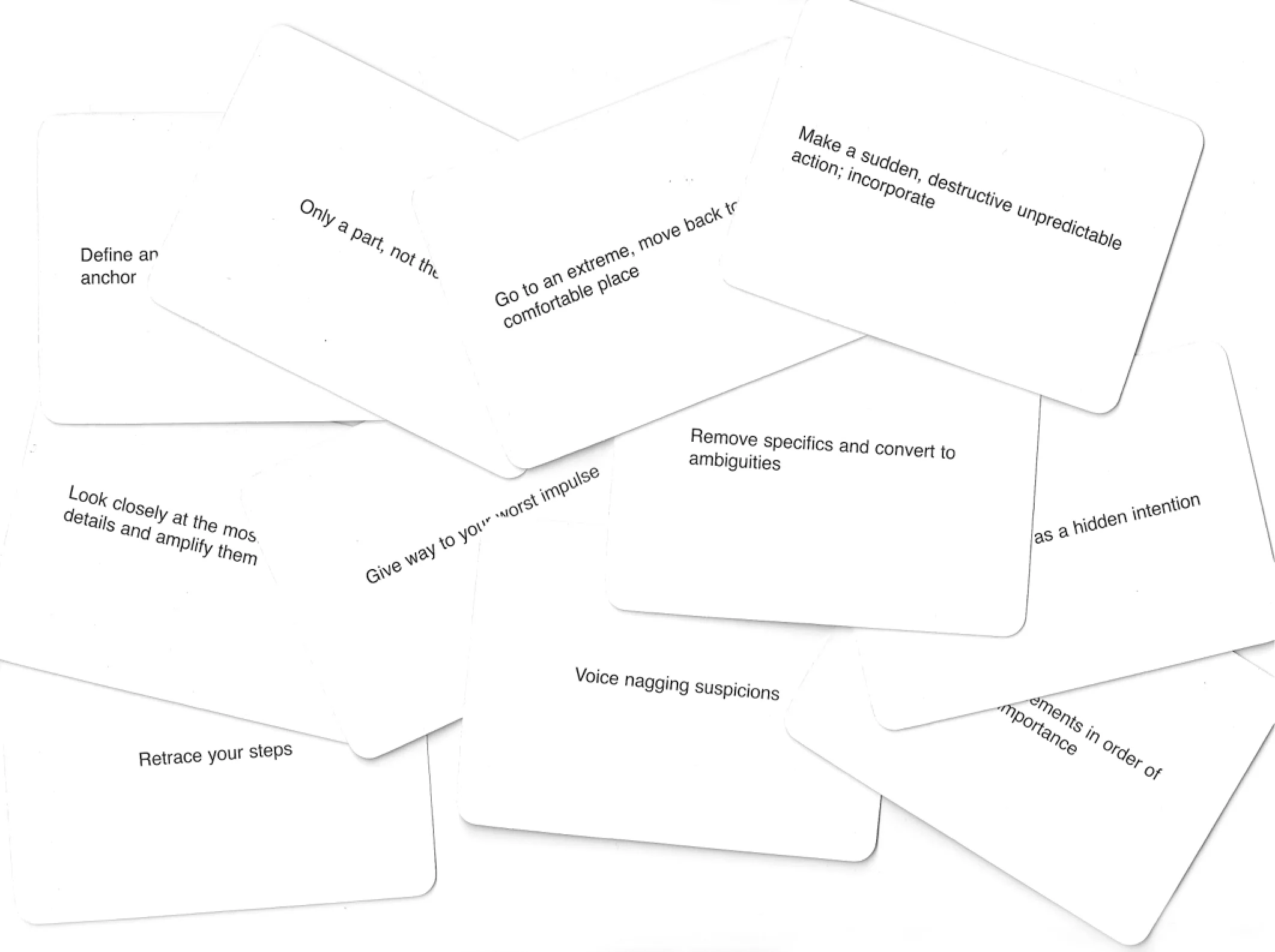
The Cards of Oblique Strategies
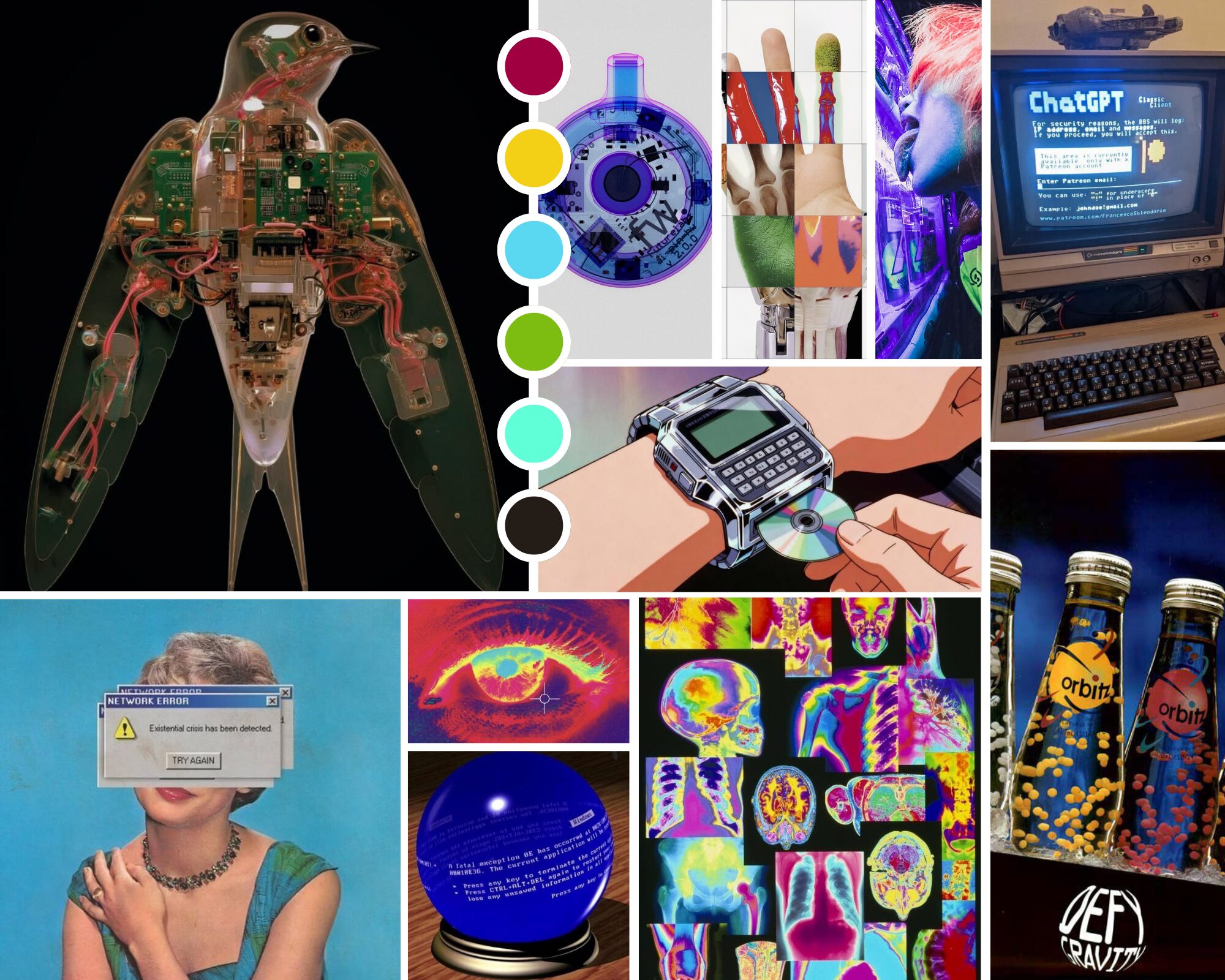
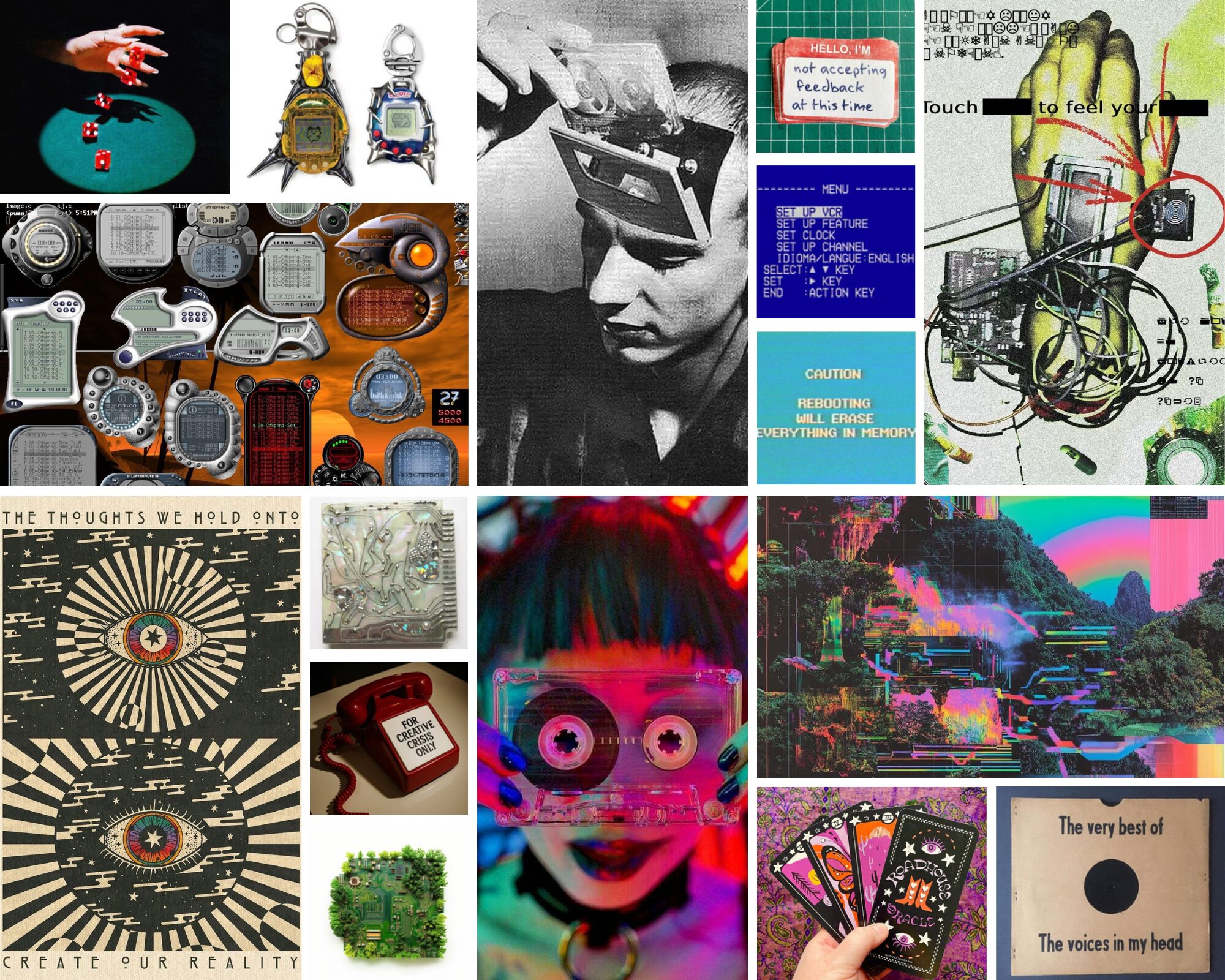
Concept Look & Feel
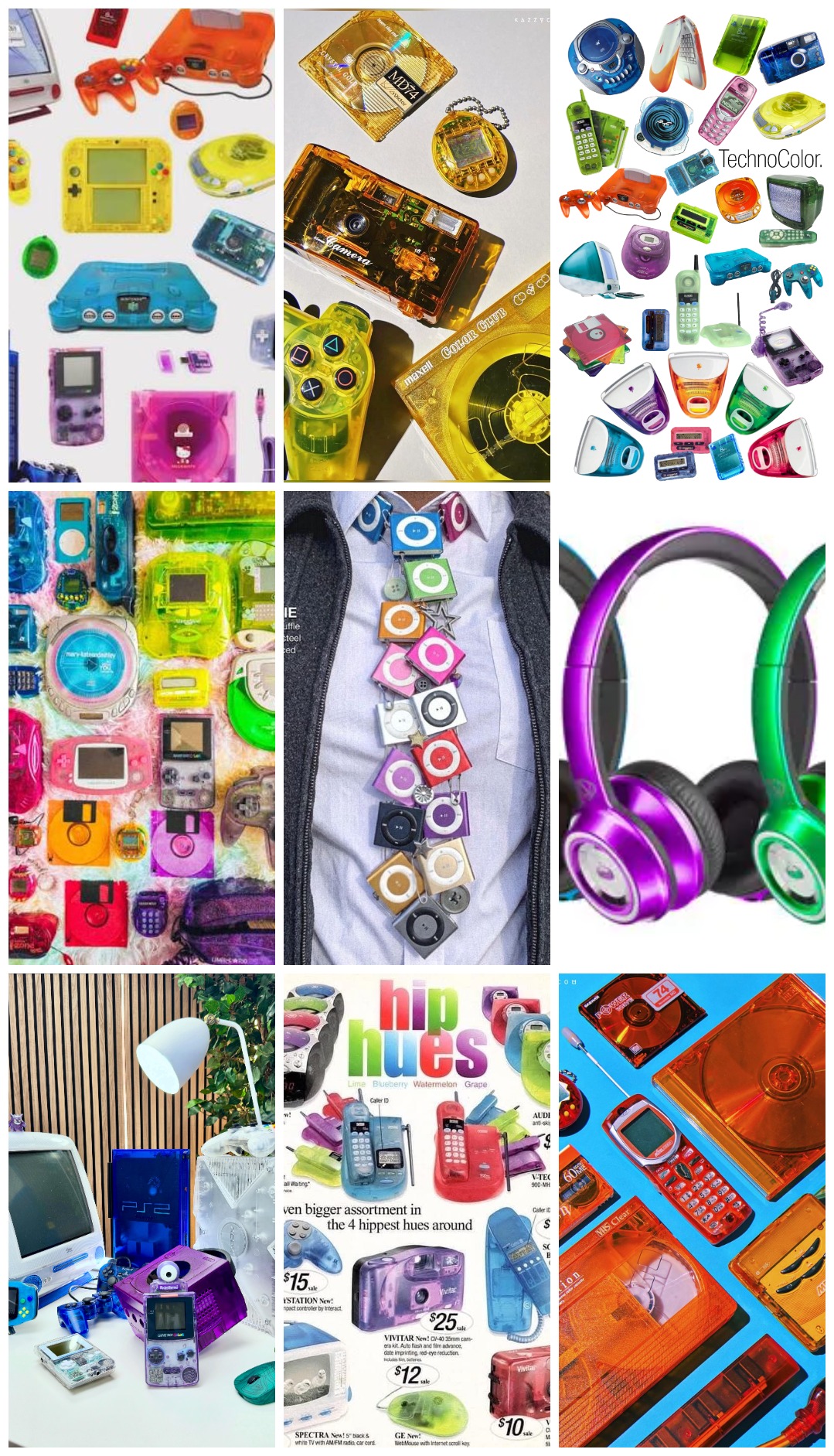 The Blobject: Instead of the sterile, sealed-shut metal rectangles of modern tech, the Foblique captures the tactile optimism of late-90s/Y2K industrial design, when technology felt playful, transparent, and inherently creative.
Housed in a chunky, translucent candy-colored shell borrowed from the Dawn of the Personal Computer, the Foblique is a deliberate nod to the transitional period when tech was moving from businesses into the personal realm, as the design aesthetic was originally born of several overlapping ideas that the Foblique aligns with, paramount among them was to make computers approachable and friendly. Transparency and bright, fruity colors (ex. Bondi Blue, Tangerine, Grape, Lime) signaled that a computer could be personal, playful, and for everyone, not just office workers or hobbyists.
As Steven Holt writes in Blobjects & Beyond: the new fluidity of design (2005), “The blobject serves as the ideal visual representation of our increasingly fluid and changing culture. […] The fluidity inherent in the blobject implies change, dynamism, communication, and progress, and thus gives us cause to hope.”
Also, because Y2K translucent tech was made of a durable, high-impact polycarbonate, it presented like it would easily survive being thrown into a backpack or dropped on a floor. This further invites users to grab and shake the Foblique without being precious about it.
The Shake: Shaking is a gesture of frustration, but not exclusively. We shake our tools when using spray-paint, a Magic 8-Ball, or dice, for example. Art, fortune-telling, and chance, all in one gesture.
In this case, it is also an externalization of an internal cognitive dissonance: The user is physically shaking the device the way they might want to shake some sense into their own brain.
Concept Form & Function
 The Watchface: To earn a place in someone’s daily carry, an object needs a mundane, everyday utility. If it only dealt Oblique Strategies, people would be less likely to carry it.
Time and lateral thinking also have an interesting tension. The pocket watch rose alongside railway timetables and factory shifts, as an instrument for keeping people on schedule. It measures linear (read: productive) time, like deadlines or appointments, while an Oblique Strategy card exists specifically to interrupt linear thought. By housing both in the same small object, the two make each other more interesting. Checking the time becomes an invitation to change how you are spending it.
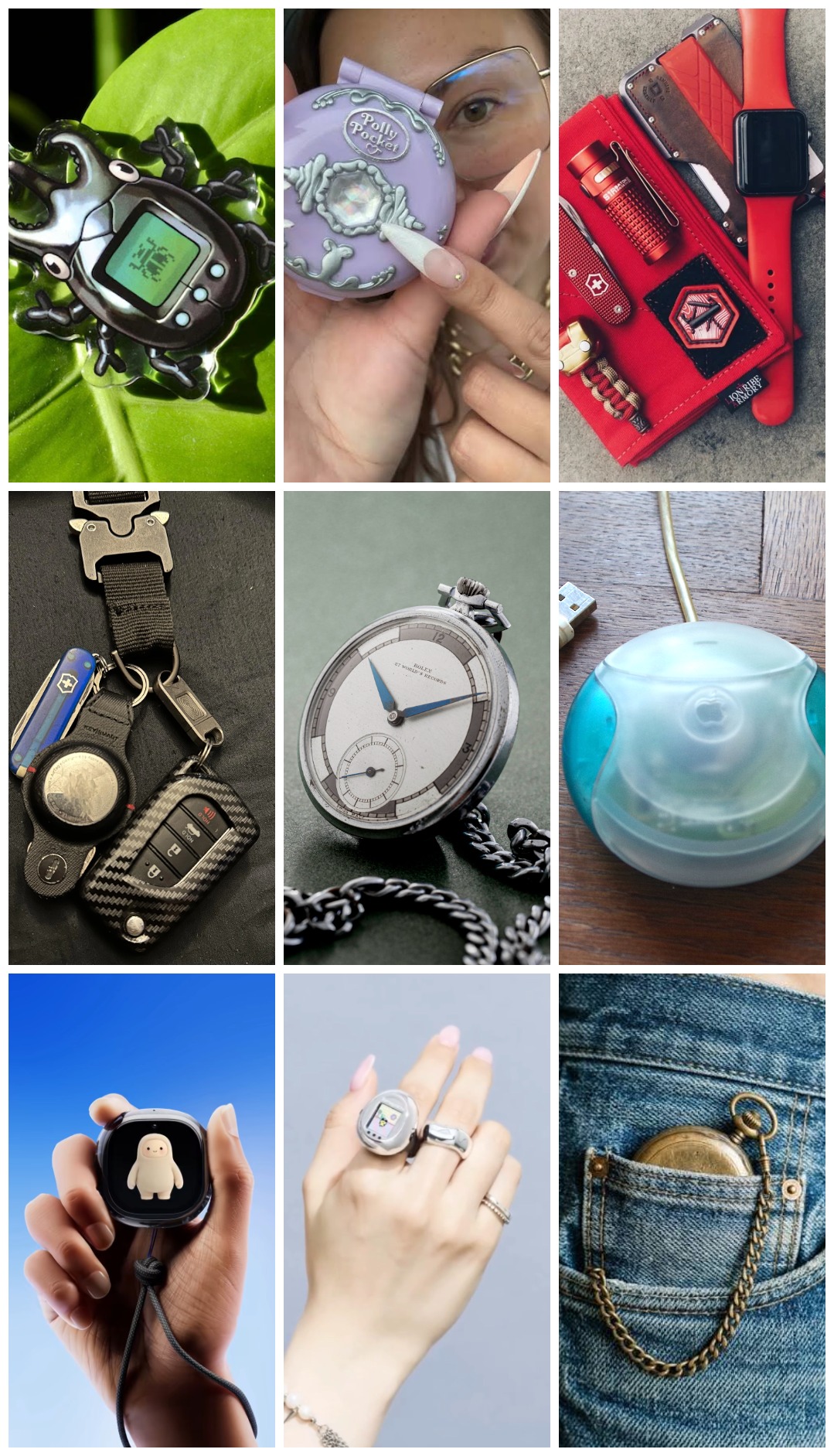
The Shape: The Foblique’s silhouette borrows from a family of small, rounded objects designed for a hand to wrap around, with no sharp corners, like the Tamagotchi, the iMac “hockey puck” mouse, or Polly Pocket. The final shape (yet to be determined) therefore, will feel bulbous, smooth, and inherently comfortable to hold.
At the top will be some type of bail, determined by research, which takes a chain, lanyard, or carabiner, so it can live in a pocket, on a belt loop, or clipped to a backpack strap.
Drawing a Card: The Foblique shrinks the original deck down to pocket size and puts it behind a gesture you already know. Shake it and it wakes and draws a random card. Because not every prompt fits every moment, the Foblique doesn’t pretend otherwise: if the card misses, shake again. The next card is only a flick of the wrist away.
Keeping a Card: When the right card shows up, leave it on the screen to work alongside it, bookmark it for later, or send it to a nearby device so it follows you out of your pocket and into your project. The Foblique deals the cards, but you decide which ones stay.
The Reset: When you’re done with a card, a different gesture ends the experience and the clock comes back.
Waking and dismissing are separate actions, and further research will determine what’s best. (ex. swipe the card away, put the device face down, press a button on the screen, etc.). After the cards are dismissed, it goes back to being a watch and then to sleep.
Likely Tech Requirements
Condensed Research Findings
Previous Oblique Strategy Adaptations
Every Day Carry (EDC) Context & Lineage
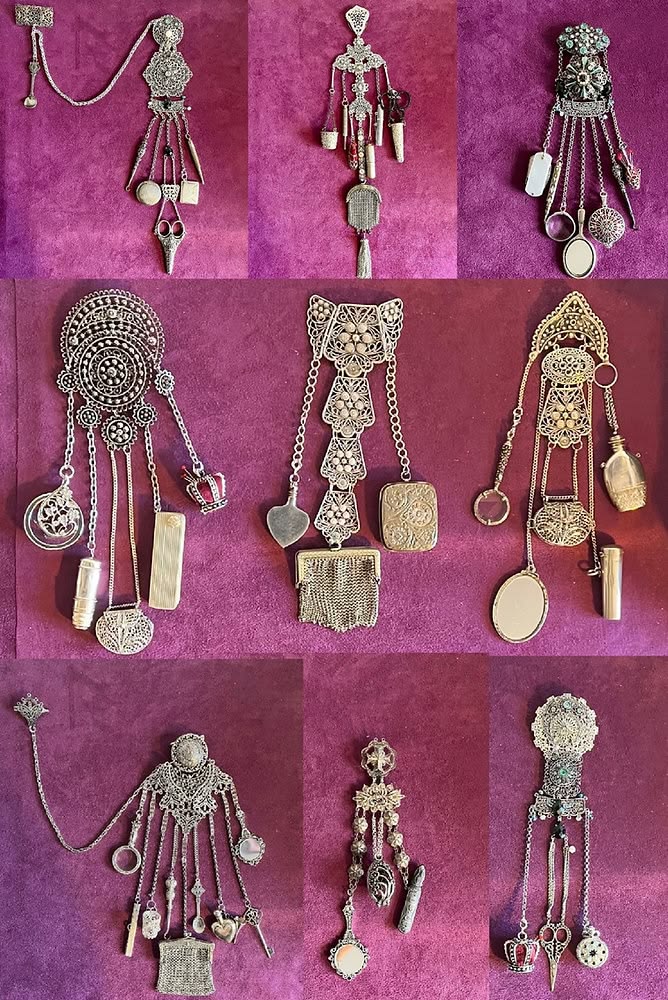 The Pre-Pocket Era: People have always carried what they needed on their bodies. Because most historical clothing lacked functional pockets, people used to wear them as heavy, kinetic jewelry, hung from a belt. (Chatelaine fittings turn up in early medieval graves, and the earliest versions held daily necessities like keys, a tobacco container, and a sheathed knife.) The Victorians later tied this type of accessory to women’s household authority, but the underlying idea, that what you need should hang within reach of your hand, never belonged to one gender. In many cases, as with estate managers, openly wearing tools and keys was a literal display of access and power.
Post-War (Post-WWI to the 1990s): The chatelaine eventually vanished due to the standardization of the pocket. By the end of the First World War, tailoring had evolved, and the wristwatch had fully replaced the pocket watch. Tools were compressed so they could be hidden away. Instead of a belt suspending six different objects, tools like the Swiss Army Knife housed them all in one handle. For most of the 20th century, everyday utility was meant to be invisible; tucked out of sight in suit coats, denim pockets, and handbags.
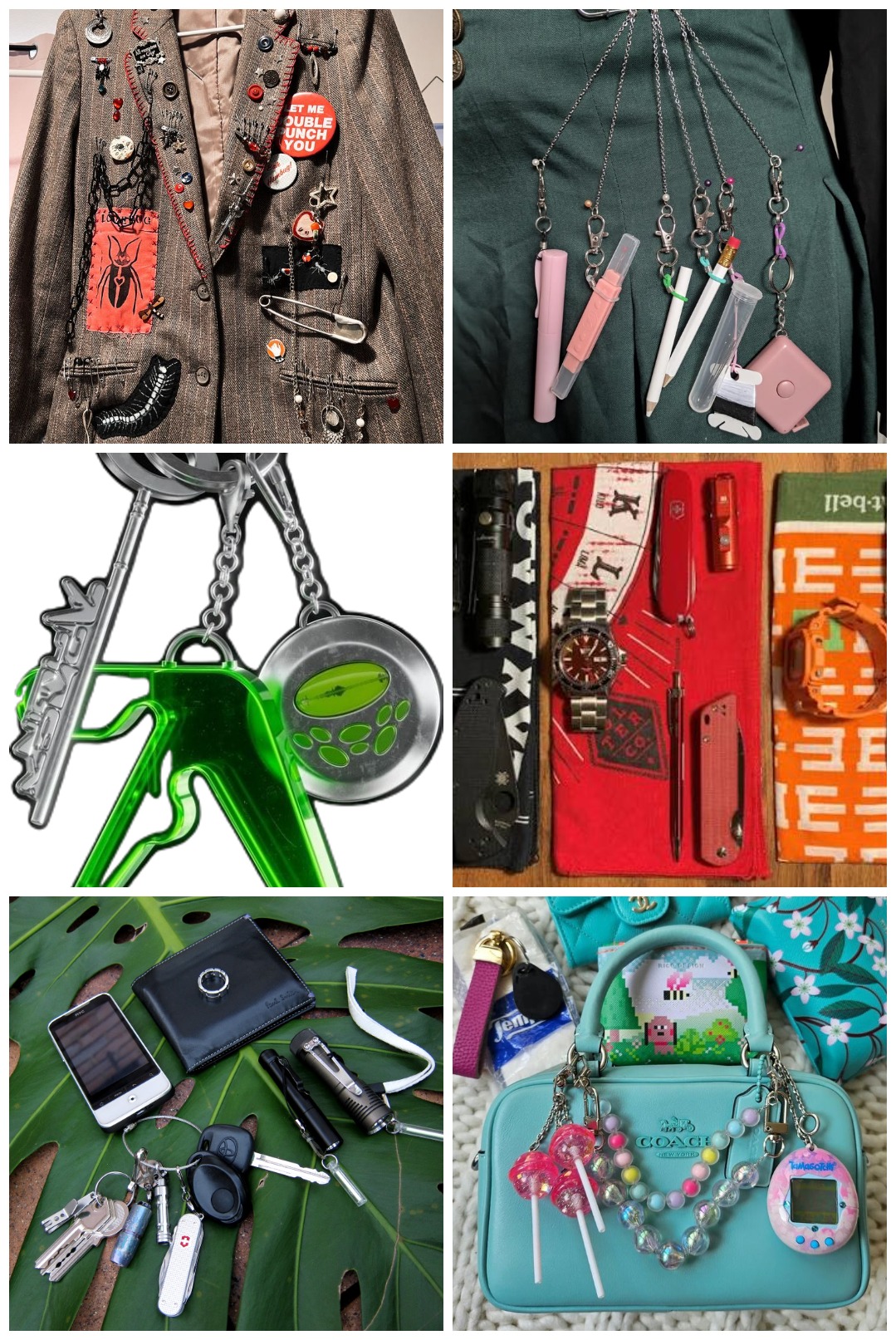 Y2K, Tech as an Accessory: In the late 90s and early 2000s, tools became highly visible again. This era saw an explosion of experimental, expressive hardware design. Phones flipped, swiveled and featured unique asymmetrical geometries. Because these early devices were seen as extensions of identity rather than just appliances, hardware designers began including lanyard loops molded directly into the plastic. People wore their technology. Alongside visible beepers, they dangled digital pets, USB drives, and charms off their devices, or clipped them directly to their backpacks and belts. It was the era of the Tamagotchi. Tech had become an integral part of the Every Day Carry.
The Modern Revival: Then, the smartphone arrived. It absorbed the camera, the map, the watch, and the notebook, trapping an entire chatelaine’s worth of tools behind a single rectangle of black glass. Hardware design became a uniform monolith. Yet, as a direct reaction to this sterile digitalization, the physical chatelaine returned. Recontextualized for the modern era, they are found everywhere, clipped to keychains, backpacks, waistbands, and belt loops as statement pieces. Along with small toys, like Labubu or other plushies, people are once again dangling their daily necessities—AirPods cases, keys, lip gloss, and small tools—in plain sight. It is a modern reclamation of the oldest rule of carry: if a tool matters to you, it shouldn’t just be functional, it should be immediately at hand.
Other Creative Prompt Products
This section surveys products that, like Oblique Strategies, give a person a prompt, constraint, or random input to get past a creative block or change how they think. It covers lateral-thinking and design decks, domain-specific decks, random-input tools, and the tarot and oracle deck market that sits next to them.
1. Lateral-thinking and creativity decks
- Creative Whack Pack (Roger von Oech). A 64-card deck of creativity strategies in four suits (Explorer, Artist, Judge, and Warrior), built on von Oech’s 1983 book A Whack on the Side of the Head. Published by U.S. Games Systems. One listing dates its edition to 1992, while an art-press article places the deck in 1989. Marketplace listings show roughly $11 to $16. One reviewer calls it a more focused and goal-oriented relative of Oblique Strategies. A companion app offers 100 strategies, and its listing calls the physical deck million-selling (a creator claim). EBAY WALMART TAROT.NL ARTSY DEPARTMENT V APP STORE
- IDEO Method Cards. 51 cards in four categories (Learn, Look, Ask, and Try), published November 2003 by the design firm IDEO and sold through William Stout Architectural Books at $49. Each card describes one method with a short story about when to use it. A $5 iOS app version was reported in an older Cool Tools review. Aimed at designers and teams. IDEO STOUT BOOKS COOL TOOLS
- Other creativity decks. An art-press article lists Naomi Epel’s The Observation Deck (1998) and Matt Vojacek’s Game of Creativity (2018) alongside the Whack Pack and IDEO cards. A roundup of innovation and design decks adds XPlane Discovery Cards, Simple’s Branding Cards (about $20), and LPK’s Roadblocks to Innovation cards. ARTSY DISRUPTOR LEAGUE
- Deck titles seen in retail roundups. A search-results page and a buyer’s guide show titles such as Thinkpak: A Brainstorming Card Deck, 75 Tools for Creative Thinking, The Artist’s Deck (daily prompts), The Story Oracle (for writers), and Concrete Strategies: Exercises on Oblique Strategies. Details are unverified. AMAZON TOKSICK MAGAZINE
- Holstee Reflection Cards and Quick Tips. Producer Morgan Page recommends Oblique Strategies, IDEO Method Cards, and Holstee Reflection Cards, and positions his own Quick Tips deck as more actionable and more visual than Oblique Strategies. His page also says Oblique Strategies is a favorite of Calvin Harris, MGMT, and Coldplay (his claim). MORGAN PAGE QUICK TIPS
Rory’s Story Cubes. Nine dice carrying 54 images, designed by Rory O’Connor. The cube version launched in 2005 through Kadon Enterprises, and Gamewright’s 2010 US release at $7.99 was reported as its best first-year seller. A current retailer lists the classic set at about $18. Used for storytelling, writing prompts, and unblocking, with expansions sold separately. THE OUTPOST GIFTS & DECOR AS DES JEUX RAINBOW RESOURCE
2. Tarot & Oracle Decks

Tarot and oracle decks are the largest established market for drawing a card to reflect on a situation. Published estimates of its size vary widely: US$243.1 million for 2025 from Metastat Insights, about US$485 million for 2024 from Data Horizzon, about US$0.65 billion for 2025 from Business Research Insights, and US$1.9 billion for 2024 from Verified Market Reports. Projected annual growth ranges from about 3 percent to 8.5 percent. Several sources describe oracle decks as the fastest-growing segment. A retailer’s industry report claims 14.3 percent unit-sales growth for oracle decks in 2025 and typical independent-publisher prices of $22 to $45, with premium boxed sets above $65 (retailer claims, unverified). METASTAT DATA HORIZZON BUSINESS RESEARCH INSIGHTS VERIFIED MARKET REPORTS TECHNAVIO DECKAURA
Other Carry Gadgets
1. Divination and oracle gadgets
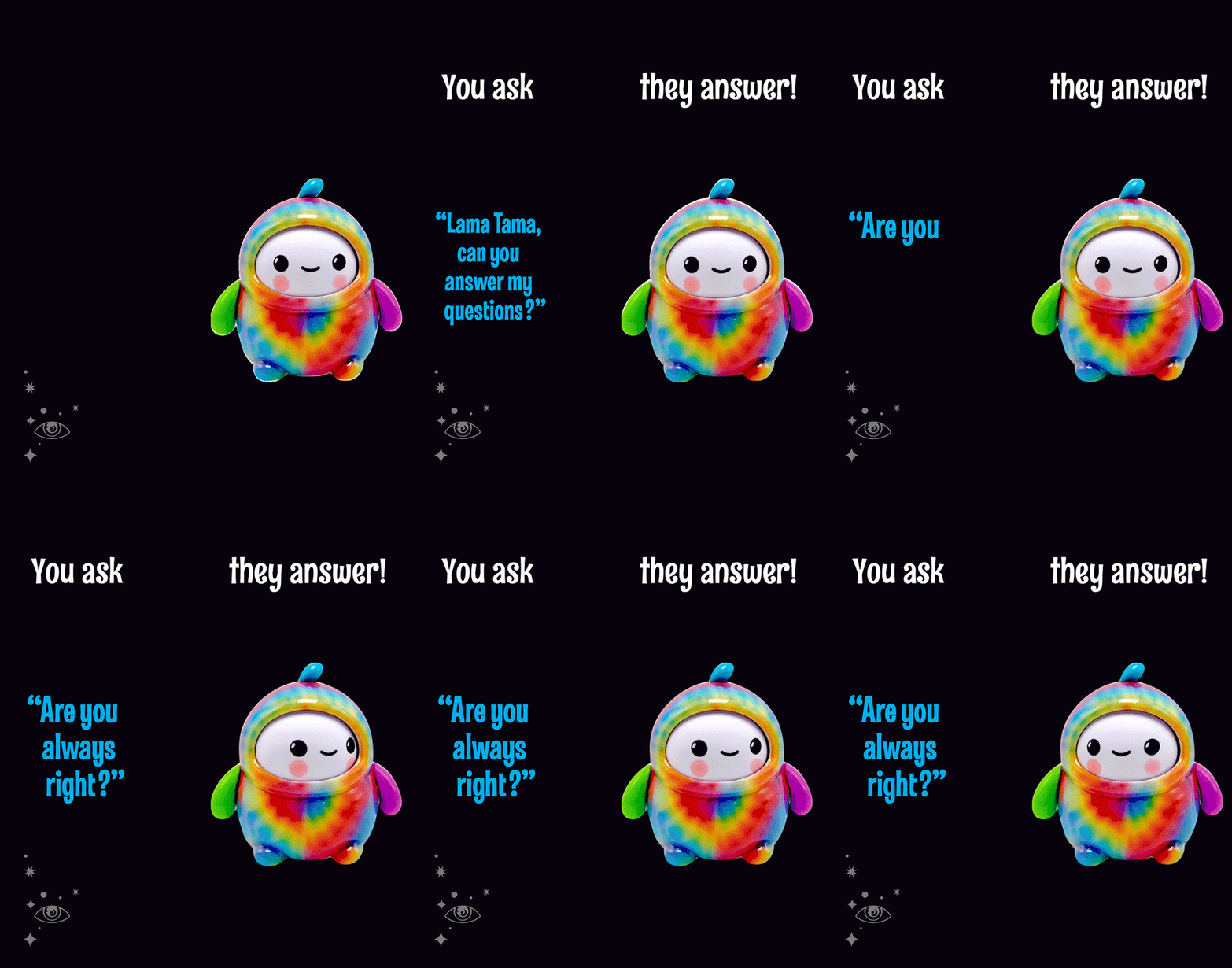 LamaTama (NSI International, 2026). Electronic collectible figures billed as mystical pocket oracles. A user asks a yes-or-no question, gives the figure a shake, and it nods for yes or shakes its head for no. Each blind box holds one of 12 characters in a series, there are at least three series, and Series 1 includes a 1-in-100 rare figure and a 1-in-1,000 transparent one. A small lanyard is included. On Amazon.com, Series 1 and Series 2 each ranked fourth in Fortune Telling Toys with 200-plus bought in the past week, and Series 3 was listed as the top new release in the category. The UK listing showed 200-plus bought in a month and 164 ratings. A toy blogger says it sold out on TikTok Shop and was launching at Target in June 2026.
AMAZON (SERIES 1) AMAZON (SERIES 2) AMAZON (NEW RELEASES)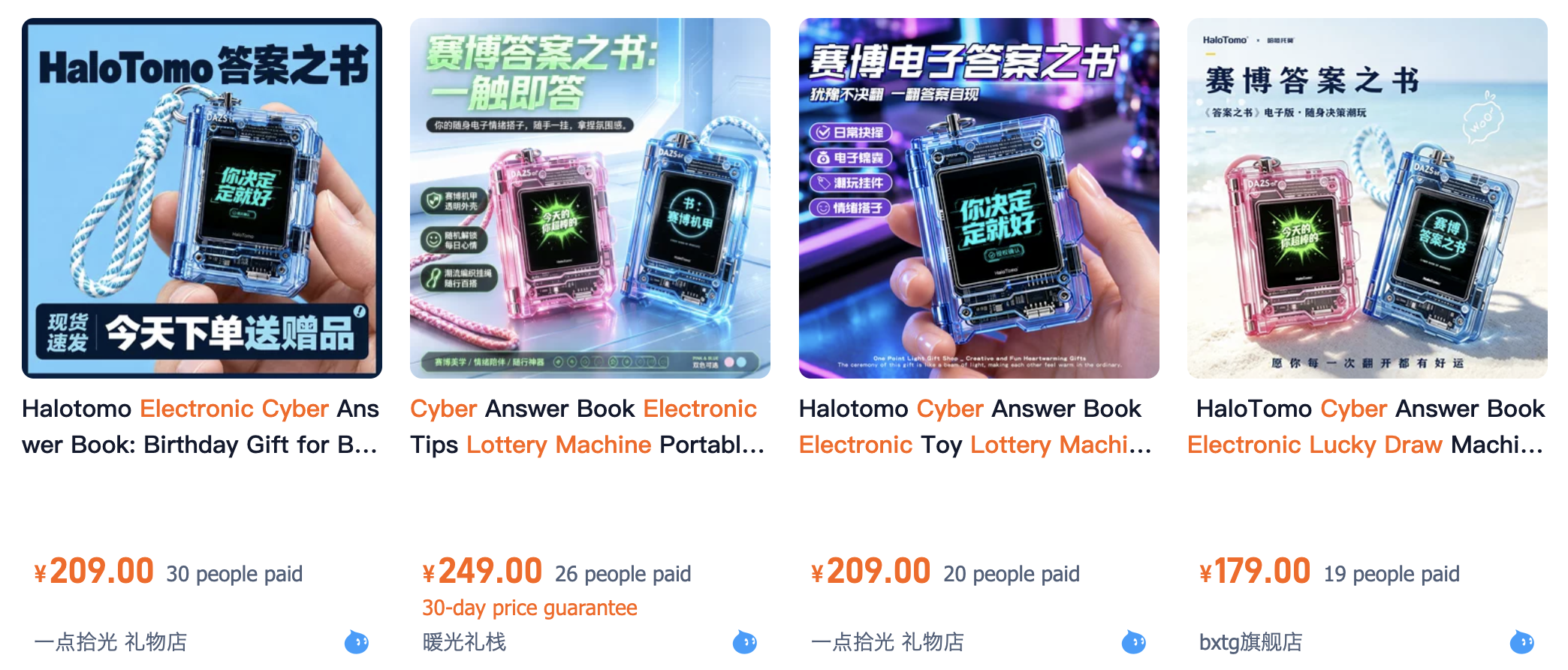 Halotomo Cyber “Book of Answers” (China). A pocket-sized pixel-art electronic fortune-telling gadget with a small screen and chunky buttons that returns random answers. A RADII article dated October 15, 2026 calls it a rising bag charm that draws on blind-box culture and Y2K aesthetics, and says it is sold on Taobao. A Chinese review site tested a similar mini e-ink draw-lots machine marketed as a pocket prophet and judged it a stress-relief entertainment toy, not a necessity. RADII SMZDM
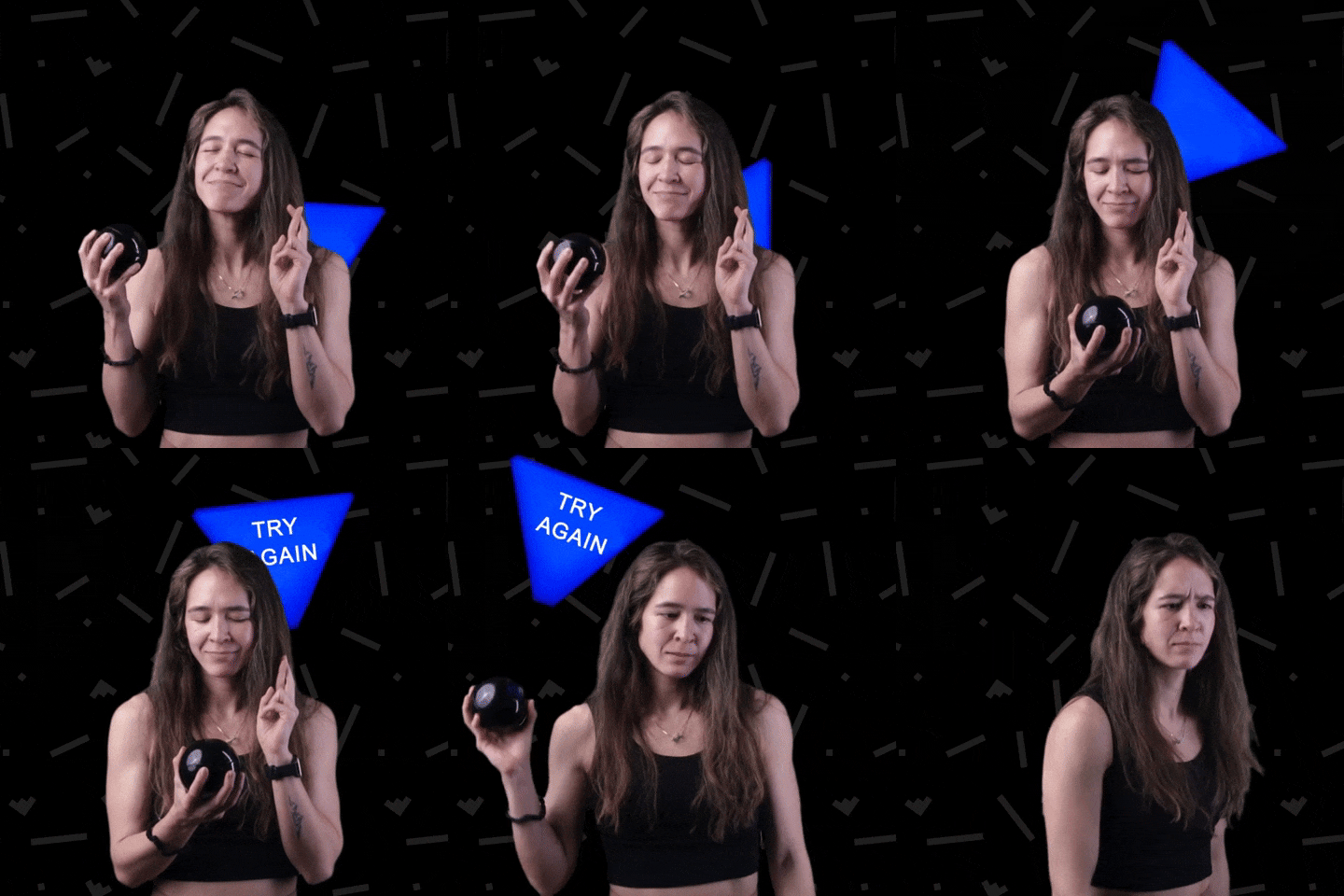 Magic 8 Ball (1950 onward). The long-running shake-to-answer anchor. Mattel reports selling about a million a year, a figure repeated since 2012, and TIME named it one of the 100 greatest toys in 2011. Third-party Amazon trackers estimate thousands of monthly units for leading listings in 2026. WIKIPEDIA MENTAL FLOSS ASINSIGHT
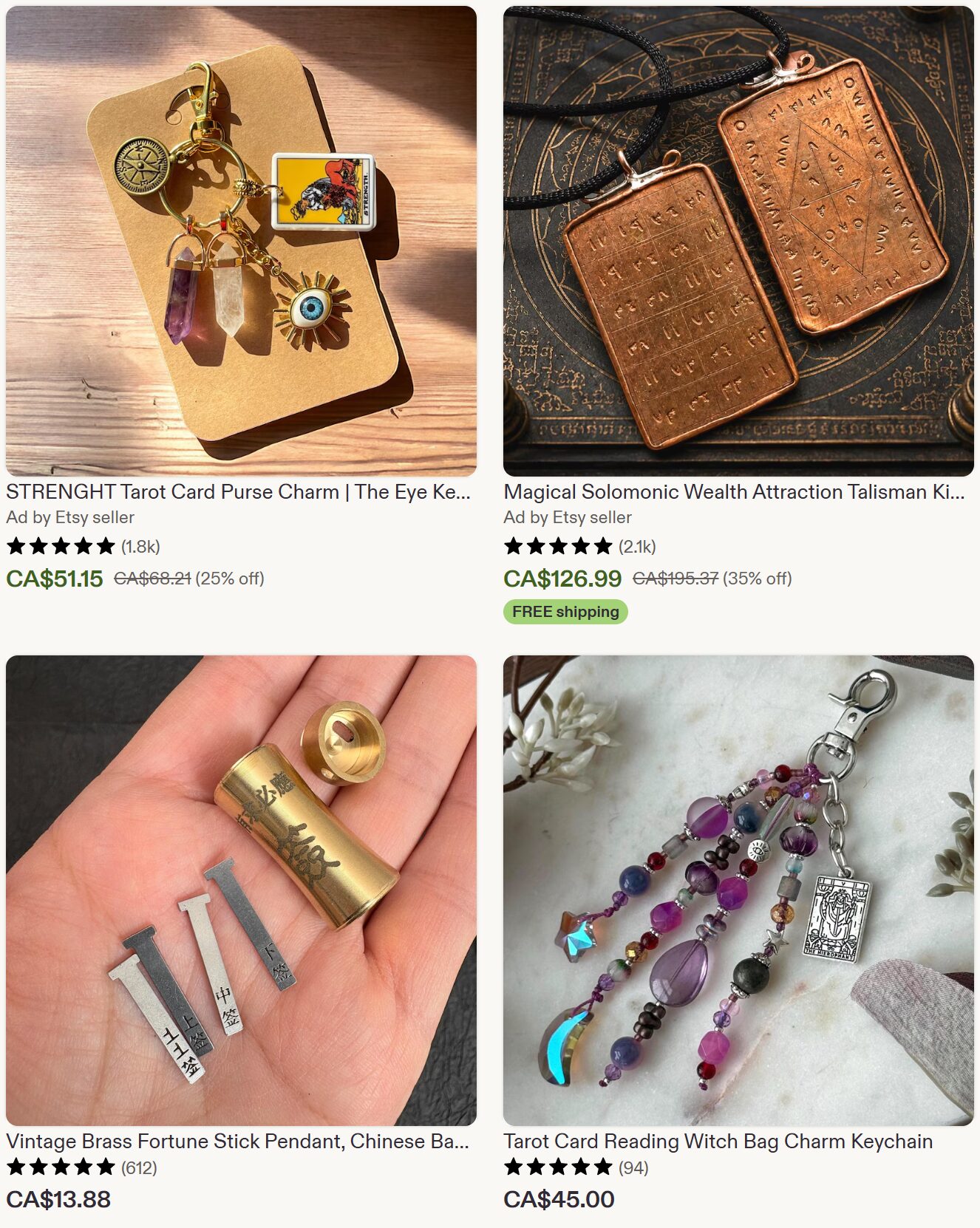 Keychain fortune toys. Keycraft’s Fortune Spinner is a keychain with a button and a spinning ball of fortune that clips onto keys, bags, or backpacks, and is pitched as an impulse buy. Amazon’s fortune-telling category also lists a Tiny Mystic Pickle keychain with 100-plus responses, and U.S. Games’ Tiny Tarot keychain deck ranked #40 in Fortune Telling Toys. Etsy tarot keychain and bag-charm listings show hundreds of reviews, one about 611 and another about 1,000. A tiny keychain-size Rider-Waite tarot deck listing on Etsy shows close to 200 reviews, a rough sign of steady purchases of portable tarot AMAZON (KEYCRAFT) AMAZON (TINY TAROT) AMAZON (FORTUNE TELLING TOYS) ETSY (KEYCHAINS)
1.2 Divination Apps
- I Ching apps with a shake gesture. I-Ching: The App of Changes lets users cast virtual coins by shaking the phone. Other apps include AI-based readers, such as one built on GPT-5 by an independent developer. No dedicated I Ching hardware on sale turned up. I-CHING APP OF CHANGES APP STORE GOOGLE PLAY
- Astrology and tarot apps. Co-Star reports more than 20 million downloads, and Nebula became the most downloaded astrology app in the US in summer 2020, per Sensor Tower. Market-size estimates for the category range from about $194 million to $4.75 billion depending on the report. [WIKIPEDIA (NEBULA)](https://en.wikipedia.org/wiki/Nebula_(spiritual_guidance%29) ASTROLOGICA MARKET GROWTH REPORTS
2. AI pocket and wearable devices on sale
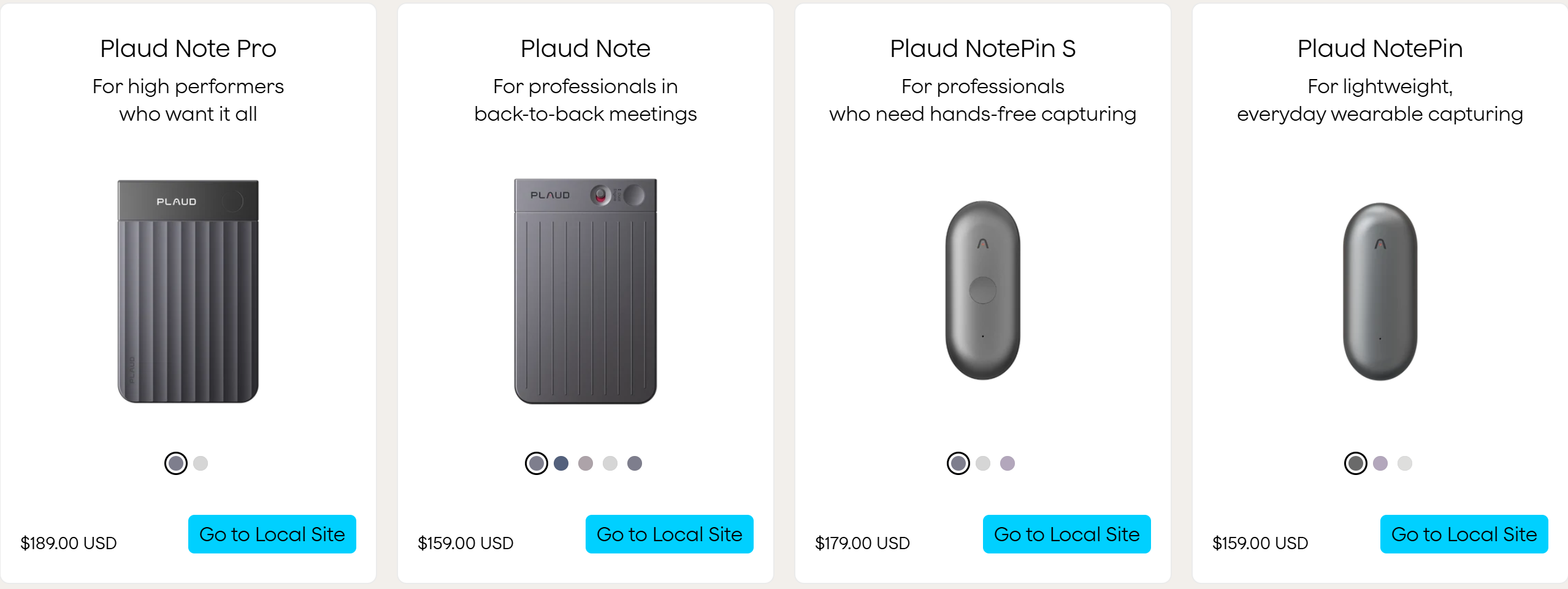
- Plaud (2023 onward). AI voice recorders in two forms: the Plaud Note, which sticks to the back of a phone, and the NotePin, which can be worn as a brooch, pendant, or wristband. The company says it has sold more than 2 million devices and that its software business passed $100 million in annualized revenue in June 2026, with nearly half of device owners upgrading to paid plans. It projects $500 million in 2026 sales, per Bloomberg’s reporting. A co-founder says it launched on Kickstarter and was profitable immediately. It is the strongest demand evidence in the category, and nearly all of it is company-reported. TECHCRUNCH ANDROID AUTHORITY KR-ASIA
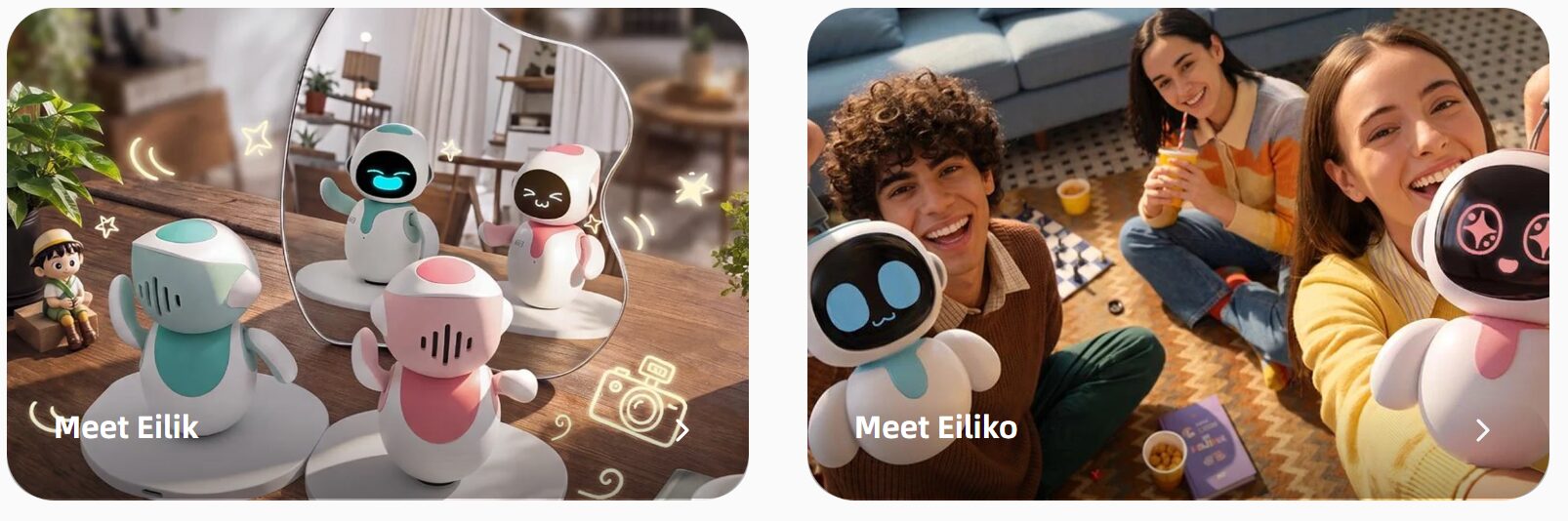
- Eilik and Eiliko (Energize Lab). Eilik is a desktop companion robot, sold in versions without Wi-Fi or AI. Eiliko is the pocket-sized charm bot that clips onto bags, backpacks, or keychains, with AI chat, themed bodies, and mystery-box body sets. Amazon listings show 600-plus bought in the past month for Eilik and 400-plus for Eiliko, and the brand’s own store labels Eilik a best seller. AMAZON ENERGIZE LAB STORE
- Rabbit R1 (2024). Wikipedia cites 130,000 units sold. It was met with strong criticism after shipping but kept receiving updates and was still on sale in 2026. WIKIPEDIA LAYER3 LABS
- Humane AI Pin (2024). Sales fell sharply after launch and the price was cut in October 2024. Humane discontinued it on February 28, 2025 and sold its technology and team to HP for $116 million. THE DECODER YAHOO
- Limitless, Bee, Friend, and Omi. Meta acquired Limitless in December 2025 and Limitless stopped selling new devices. Amazon acquired Bee in July 2025. Friend, a necklace-style companion, drew backlash when its subway ad campaign was defaced in New York. Omi is an open-source pendant. TECHCRUNCH (LIMITLESS) PRIVSOURCE [WIKIPEDIA (FRIEND)](https://en.wikipedia.org/wiki/Friend_(product%29) TECHCRUNCH (WEARABLES)
3. Keychains, charms, and clip-ons on sale
- Tamagotchi. Bandai’s fact book counts 40.0 million first-generation units shipped from November 1996 to March 1999 and 54.5 million from March 2004 to March 2024, and Bandai announced 100 million cumulative shipments in 2025, about 49 percent Japan, 33 percent US, and 16 percent Europe. It also says merchandise sales, not counting games, rose about sevenfold in five years from 2019, and that the toy has become a fashion accessory swinging from keychains. Tamagotchi Paradise (July 2025) sold out for months, Tokyo has dedicated stores, and the 30th anniversary is November 23, 2026. BANDAI NAMCO FACT BOOK JAPAN TIMES ESSENTIAL JAPAN MALAY MAIL (AFP) SCRMBL
- Labubu and the bag-charm boom (Pop Mart). Pop Mart’s revenue rose 204 percent to about $1.9 billion in the first half of 2025, and plush products outsold figure toys for the first time. One fashion magazine called Labubu the hottest bag charm on the market. On StockX, a six-pack of Labubu plushes sold more than 12,000 times in two months at an average resale premium of nearly 60 percent. Later coverage says the craze may have peaked, with popularity declining from October 2025. On the Chinese platform Xiaohongshu, a 2024 industry article reported more than 500 million views on the bag-charm topic, with plush pendants the hottest type. ROBB REPORT YAHOO FINANCE FASHION MAGAZINE MODERN RETAIL DEMANDSAGE DIGITALING
- Fashion-side coverage. 2026 handbag trend coverage describes bag charms moving beyond plush toys toward keys, pens, and watches. RUSSH
- Pokémon GO Plus + (2023). A Poké Ball-shaped Bluetooth accessory sold with a clip strap. It plays Pokémon GO without looking at the phone and tracks sleep by detecting lack of movement. Its first round of preorders in Japan sold out immediately, and a retailer reopened reservations. DENGEKI ONLINE FAMITSU TRUSTED REVIEWS
- Thumby (TinyCircuits, 2022). A tiny handheld game console that can be mounted on a keychain. [WIKIPEDIA](https://en.wikipedia.org/wiki/Thumby_(console%29)
4. Small phones and pocket devices for play and making
- Playdate (2022). Panic’s crank-equipped handheld, designed with Teenage Engineering. Panic planned to build 20,000 units, sold 53,142 in its first year, and Wikipedia now lists more than 70,000 sold. Its Catalog marketplace sold more than 150,000 titles in a year, generating $544,290 in gross revenue for developers, and 53 percent of owners had made a Catalog purchase. VIDEOGAMESCHRONICLE GAME DEVELOPER [WIKIPEDIA](https://en.wikipedia.org/wiki/Playdate_(console%29)
- Unihertz Jelly Star (2023). A credit-card-sized Android phone with a transparent shell and LED lights that pulse with notifications, on sale since 2023. A reviewer noted it ships with a lanyard but no way to attach it to the phone. UNIHERTZ THE GADGETEER
- Pocket Operator series (2015 onward). Teenage Engineering’s pocket-sized synthesizers. The line grew from three launch models to many, including a metal series, over several years. ENGADGET ENGADGET (PO-32)
- Flipper Zero (2020). An open-source pocket multitool with an animated dolphin persona that its makers called a Tamagotchi for hackers. It is credited with bringing attention to a new class of microcontroller-based pocket tools, and open-source look-alikes have followed. MAKE LILIPUTING
5. Demand at a glance (products on sale)
- Units sold or shipped (company-reported). Tamagotchi, over 100 million; Plaud, over 2 million; Playdate, over 70,000; Magic 8 Ball, about a million a year; Rabbit R1, 130,000 per a Wikipedia citation.
- Revenue. Pop Mart, about $1.9 billion in the first half of 2025; Plaud, over $100 million in annualized software revenue and a $500 million projection for 2026 sales.
- Marketplace signals. LamaTama ranked fourth in Amazon’s Fortune Telling Toys with 200-plus bought in a week; Eilik at 600-plus and Eiliko at 400-plus bought in a month; Etsy tarot keychains with hundreds to about 1,000 reviews; 53 percent of Playdate owners have bought from its Catalog.
- Sell-outs and premiums. Pokémon GO Plus + sold out its first preorders in Japan, Tamagotchi Paradise sold out for months, LamaTama sold out on TikTok Shop, and a Labubu set resold at a premium of nearly 60 percent.
- Corporate moves. Amazon acquired Bee, Meta acquired Limitless, and HP bought Humane’s technology and team.
- Backlash and failure. The Humane AI Pin shut down and Friend’s ads were defaced.
6. Crowdfunding and upcoming products
Kickstarter campaigns show demand for products that are not yet on sale, and how some products now on sale began. Totals are campaign pledges, not sales.
- Karmi (2026, campaign ended). Team Zero Studio of Hong Kong describes it as a pocket fortune teller: shake, reveal, and discover tarot, lucky numbers, and daily fortunes. A trend article says users press for a message from tarot cards or shake for a random fortune inspired by traditional fortune sticks, and that it also offers simplified I Ching-inspired hexagrams, lucky colors, and fortune cookies. Its Kickstarter began June 11, 2026 and ran about 25 days, ending at HK$373,121 from 845 backers against a HK$16,000 goal, roughly 23 times the goal. KICKSTARTER KICKTRAQ TRENDHUNTER
- Stellark (2026, campaign ended). A wearable pendant with a 1.75-inch AMOLED touchscreen for tarot readings and a daily fortune, drawn by shaking, with WiFi for AI insights and an offline mode. Its Kickstarter ran September 10 to October 10, 2026 and funded with 50 backers and $4,650 against a $2,000 goal. The Foblique team reports, from the campaign videos, that its shake interaction works differently from the Foblique’s. The videos were not reviewed for this catalog. KICKSTARTER BACKERKIT
- Amoeba One (2026, campaign live). A keychain-sized phone with a built-in carabiner, a tiny glass touchscreen, 4G calls and texts, and no social media. Its Kickstarter began October 13, 2026. An early snapshot showed $100,690 from 920 backers, and a later one $119,724 from 1,089 backers, against a $25,000 goal. AMOEBA ONE LILIPUTING PLEDGEBOX BACKERKIT
- Karmacide wearable tarot coin (2023). A spinning fortune-telling jewelry coin based on the major and minor arcana. Its 21-day campaign drew 399 backers and $17,294 against a $999 goal. KICKSTARTER
- Oracle and tarot deck campaigns. The I-Ching Oracle (Change Tarot) campaign drew 598 backers and HK$344,928 against a HK$1,413 goal. An I Ching Sixty-Four Hexagrams oracle deck drew 69 backers and HK$26,204 against HK$10,000. Pocket Fortuna mini decks drew 174 backers and £8,919 against £4,000. The Trust Oracle Deck drew 224 backers and $14,505 against $6,000 in 2025. KICKSTARTER (CHANGE TAROT) KICKSTARTER (I CHING CARDS) KICKSTARTER (POCKET FORTUNA) KICKSTARTER (TRUST ORACLE)
- AI companion and pocket AI campaigns (2026). Joobie, a pocket-sized AI owl plush charm shown at CES 2026, showed HK$432,436 from 259 backers. Kitto, an AI talking-cat toy with Tamagotchi-like nurturing, pledged HK$181,407 against a HK$10,000 goal. AI Pal Keychain drew 51 backers and HK$19,672 against HK$12,000. A crowdfunding blog also lists the Tiiny AI Pocket Lab at $3,069,202 from 2,181 backers, Loona AI Co-Worker at about $721,000, ClawStage at HK$4.61 million-plus, and Pophie at about $327,000. CYBERPALS BACKERROCK (MAY) BACKERROCK (JUNE) KICKSTARTER (KITTO) KICKSTARTER (AI PAL)
- Keychain tool campaigns. The HEX keychain carabiner (2017) drew 286 backers and $13,527 against a $1,400 goal, and a 2026 multitool called Toolt claims 36 functions in a key-fob-sized body. KICKSTARTER (HEX) NOTEBOOKCHECK
- Campaigns behind products now on sale. Eiliko’s August 5, 2025 Kickstarter raised over $170,000 from 1,400-plus backers in 24 hours and more than $380,000 from 3,000-plus backers, about 38 times its goal, per the company. The Jelly Star raised more than $287,000 against a $50,026 goal. Plaud’s co-founder says it launched on Kickstarter. TinyCircuits’ Thumby launched through Kickstarter in 2021 and returned with a color version in 2024. Flipper Zero’s 2020 Kickstarter began its product line. YAHOO FINANCE NOTEBOOKCHECK NOYPIGEEKS KR-ASIA [WIKIPEDIA (THUMBY)](https://en.wikipedia.org/wiki/Thumby_(console%29) MAKE
- Announced, not yet shipping. Meta’s Muse Charm is a keychain-sized AI companion about the size of an Apple Watch, with a small screen for an animated avatar and a fingerprint sensor. Mark Zuckerberg showed it at Meta Connect on September 23, 2026, said only a few had been built, and targeted a December shipping window, with no price announced. Engadget’s reporter said it felt like a Tamagotchi met an AI wearable, reaction is split between novelty and privacy worries, and MacRumors reports Apple has reportedly shelved plans for an AI pendant. The Clicks Communicator, a communication-centered companion phone with a physical keyboard, was unveiled at CES in January 2026 with a Q4 2026 release window. MACRUMORS GEARLIVE THE GADGETEER STARTUP FORTUNE WIKIPEDIA (CLICKS)
- Crowdfunding against goal at a glance. Eiliko about 38 times; Karmi about 23 times (845 backers); Kitto about 18 times; Karmacide about 17 times (399 backers); Jelly Star about 5.7 times; Amoeba One about 4.8 times early on (1,089 backers); Stellark about 2.3 times (50 backers); AI Pal Keychain about 1.6 times (51 backers). Multiples depend on how low a goal was set, so backer counts are a steadier signal.
Personas
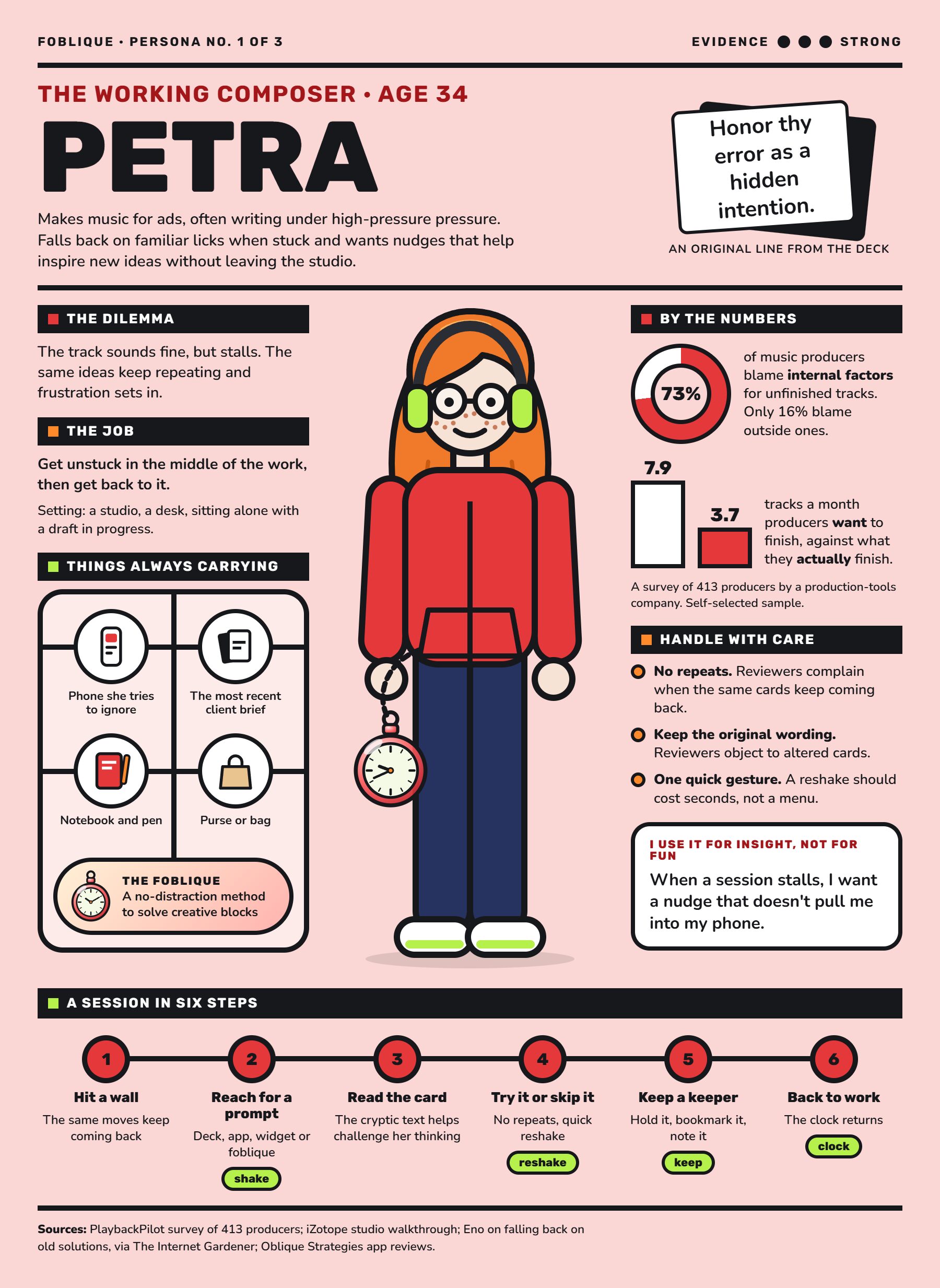
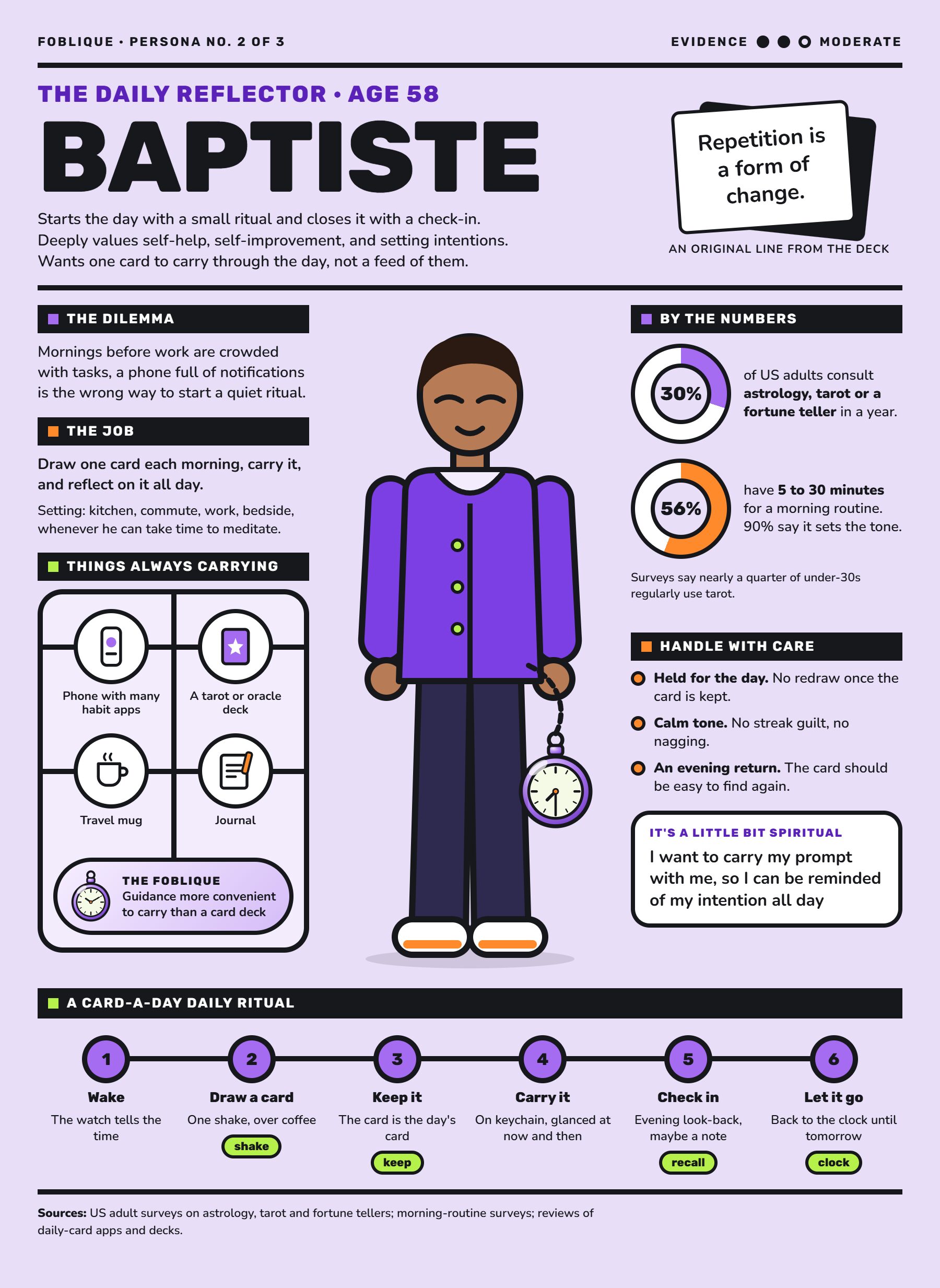
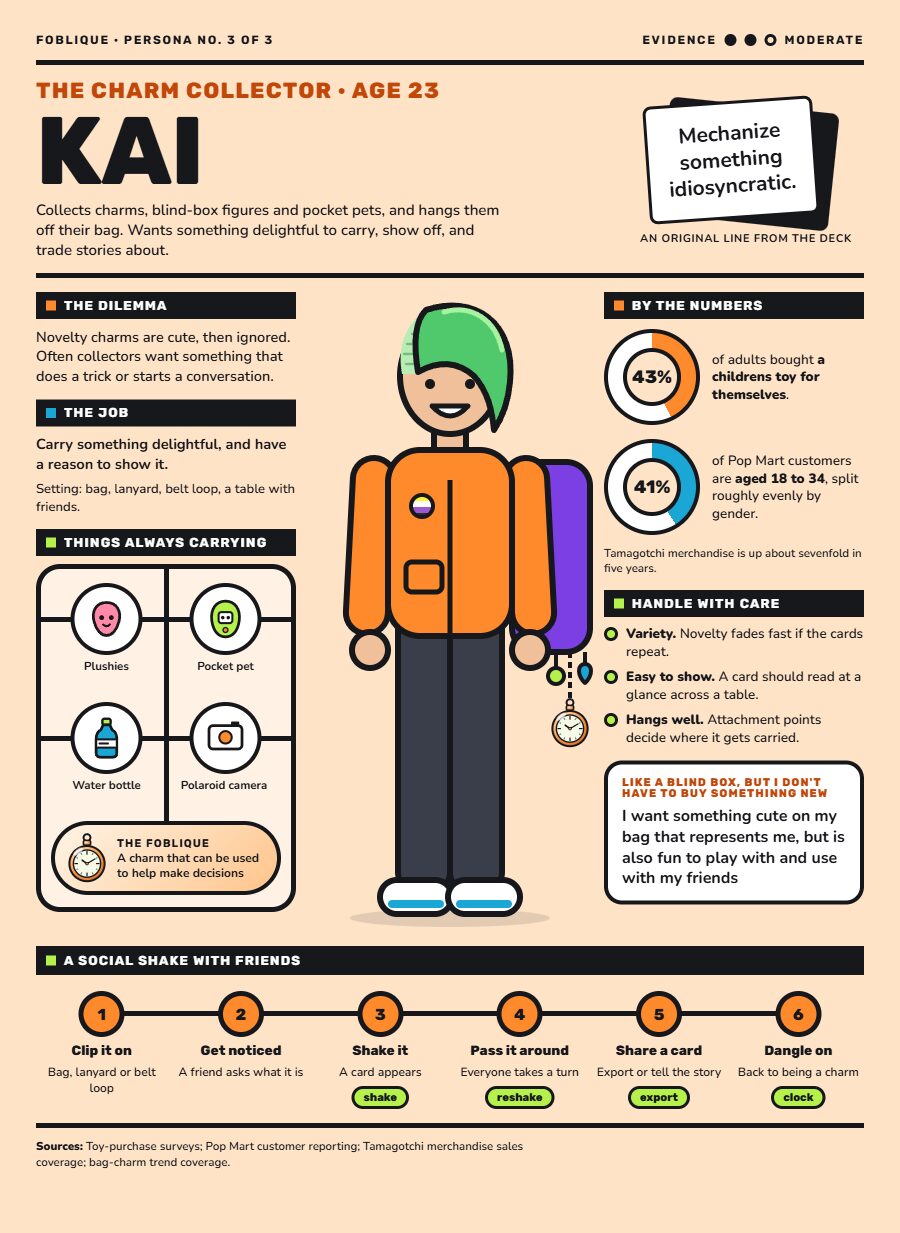
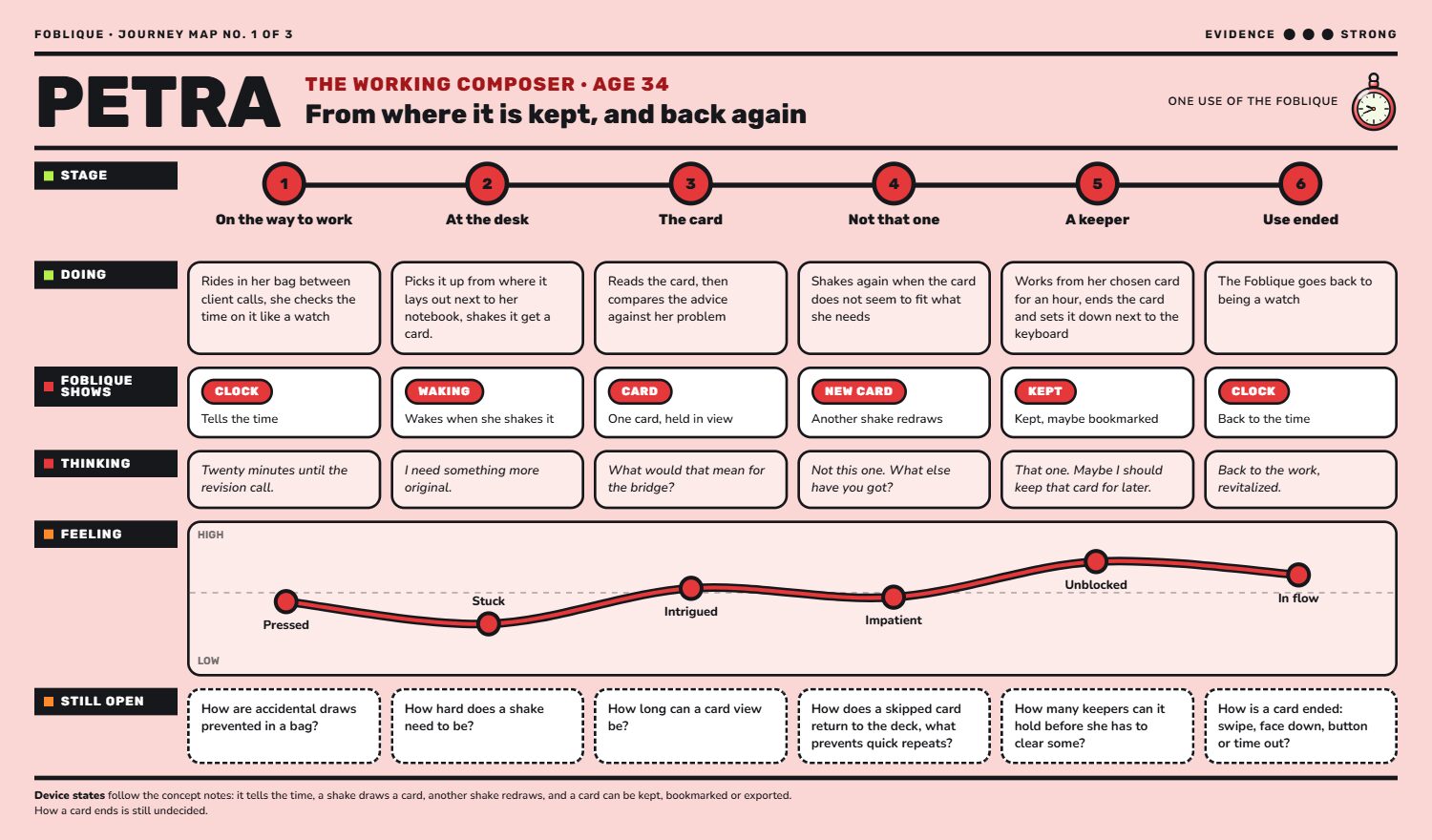
Persona Journey Maps
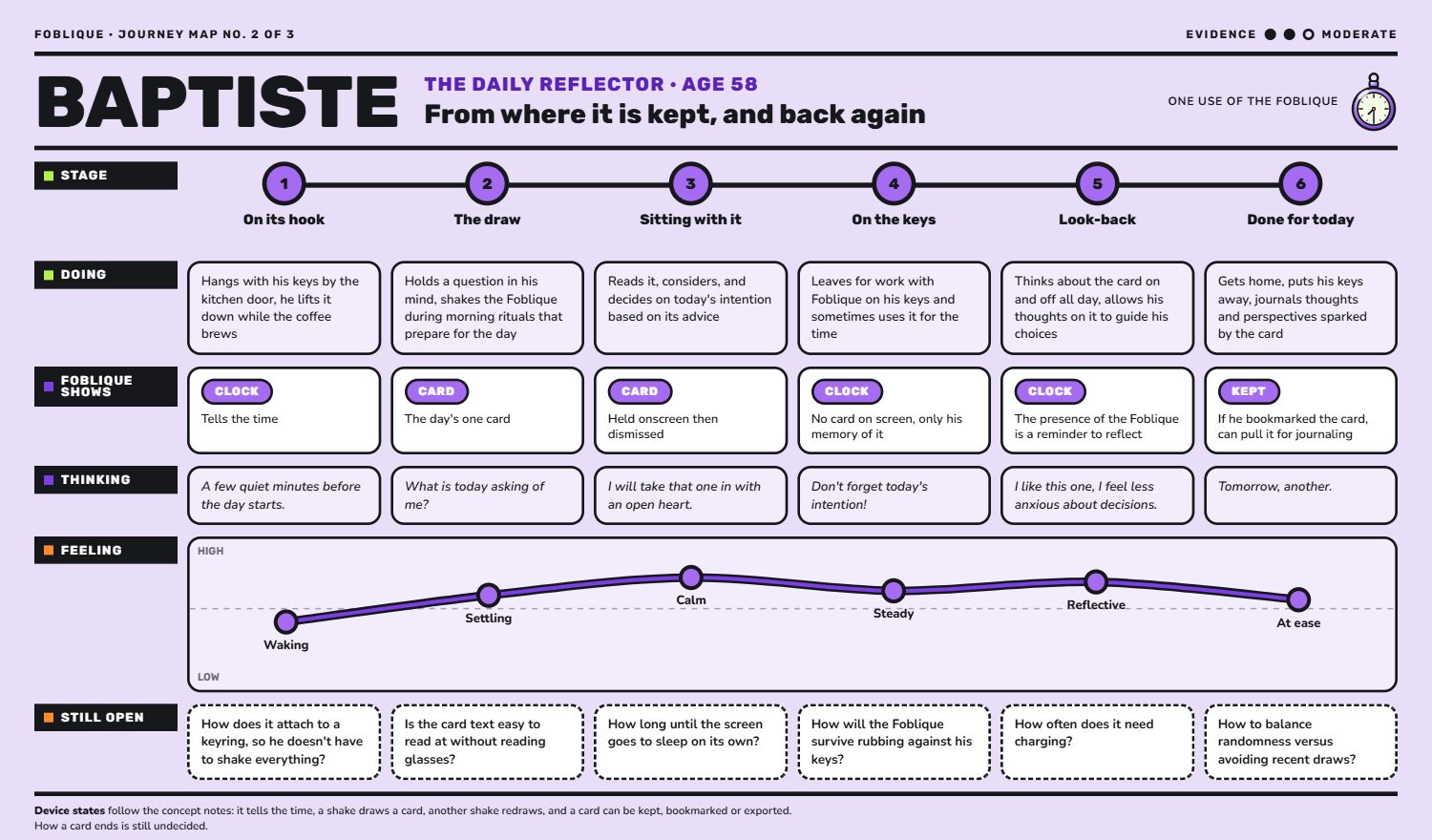
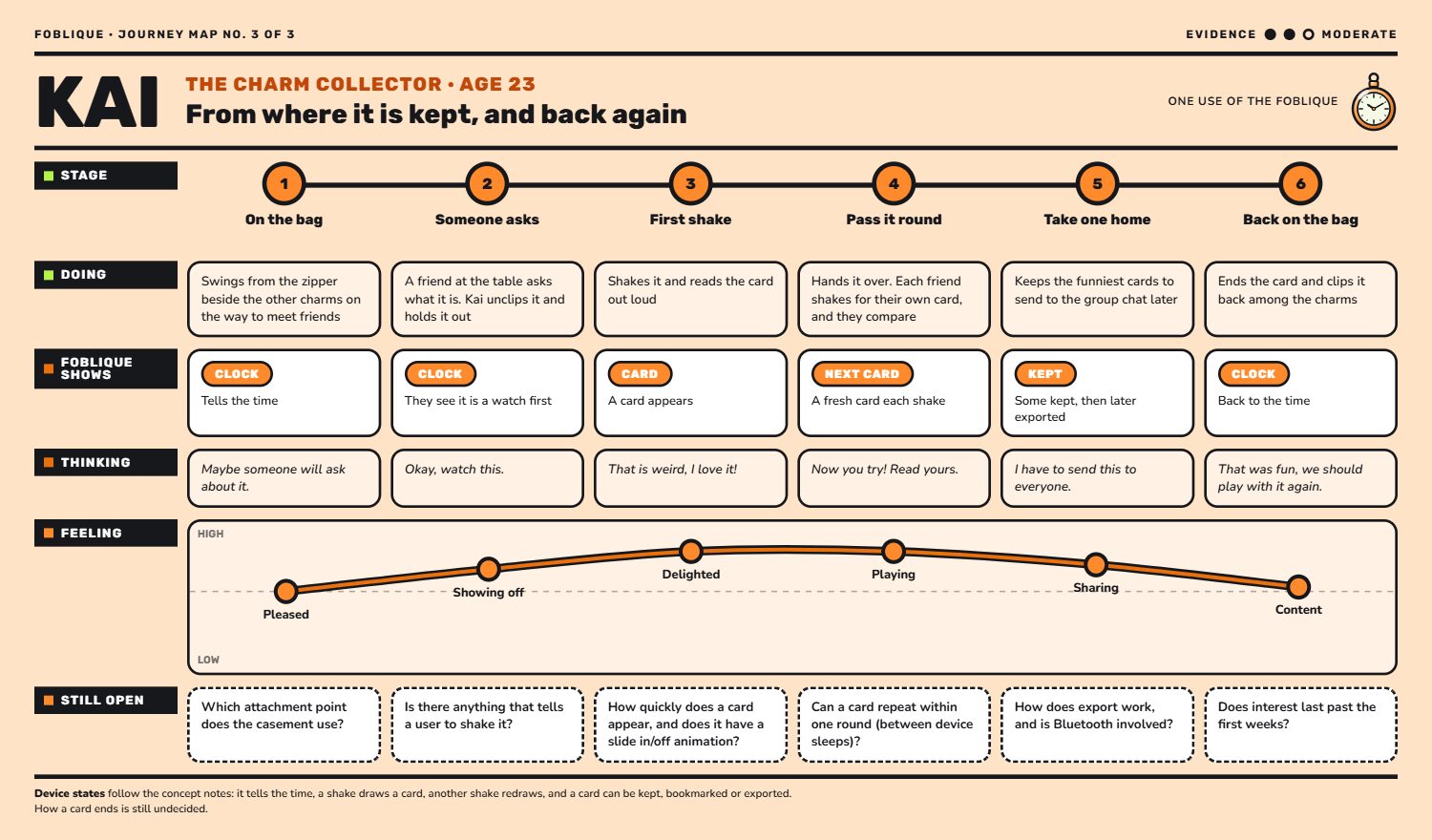
Task & State Flow Charts
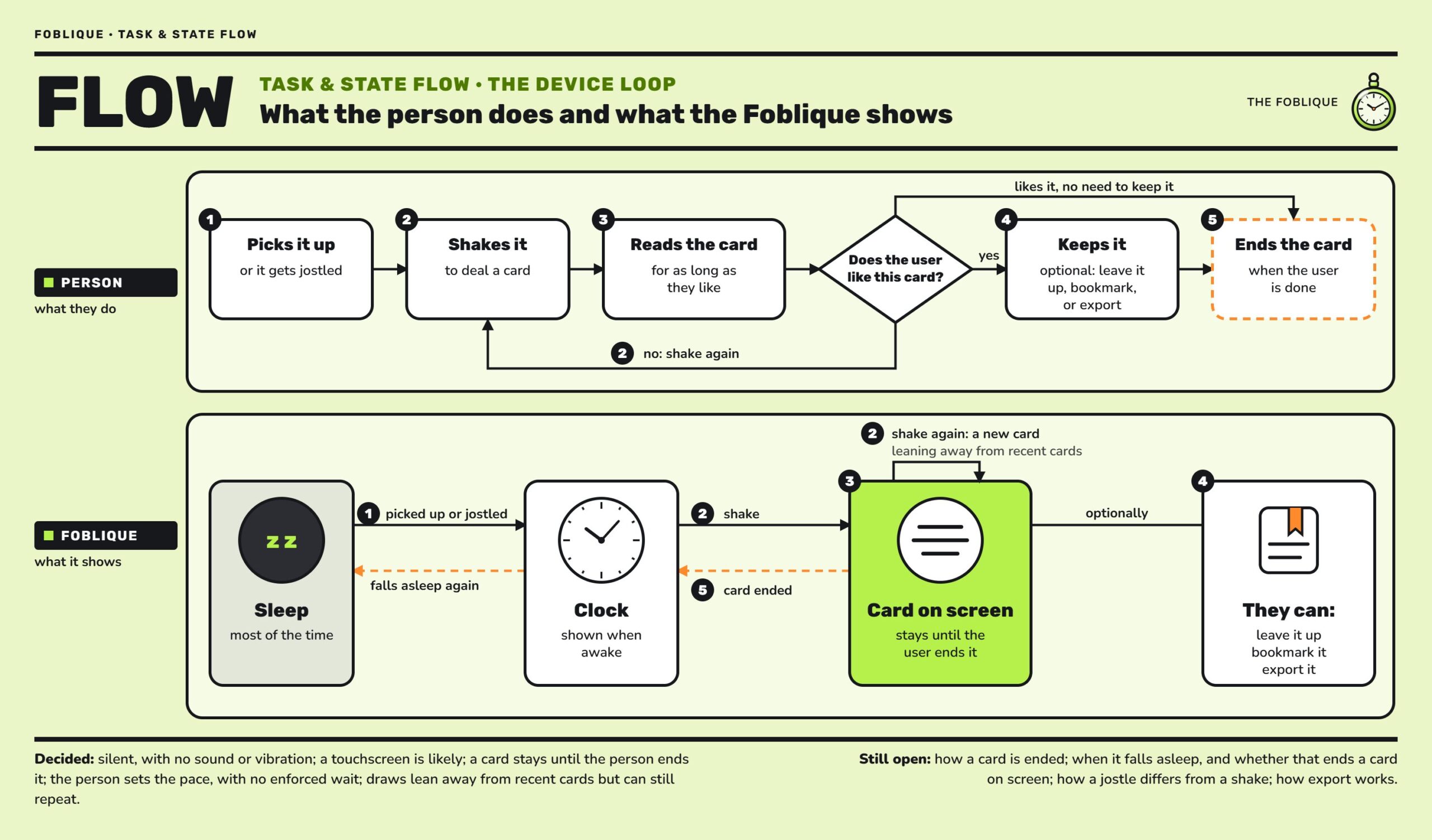
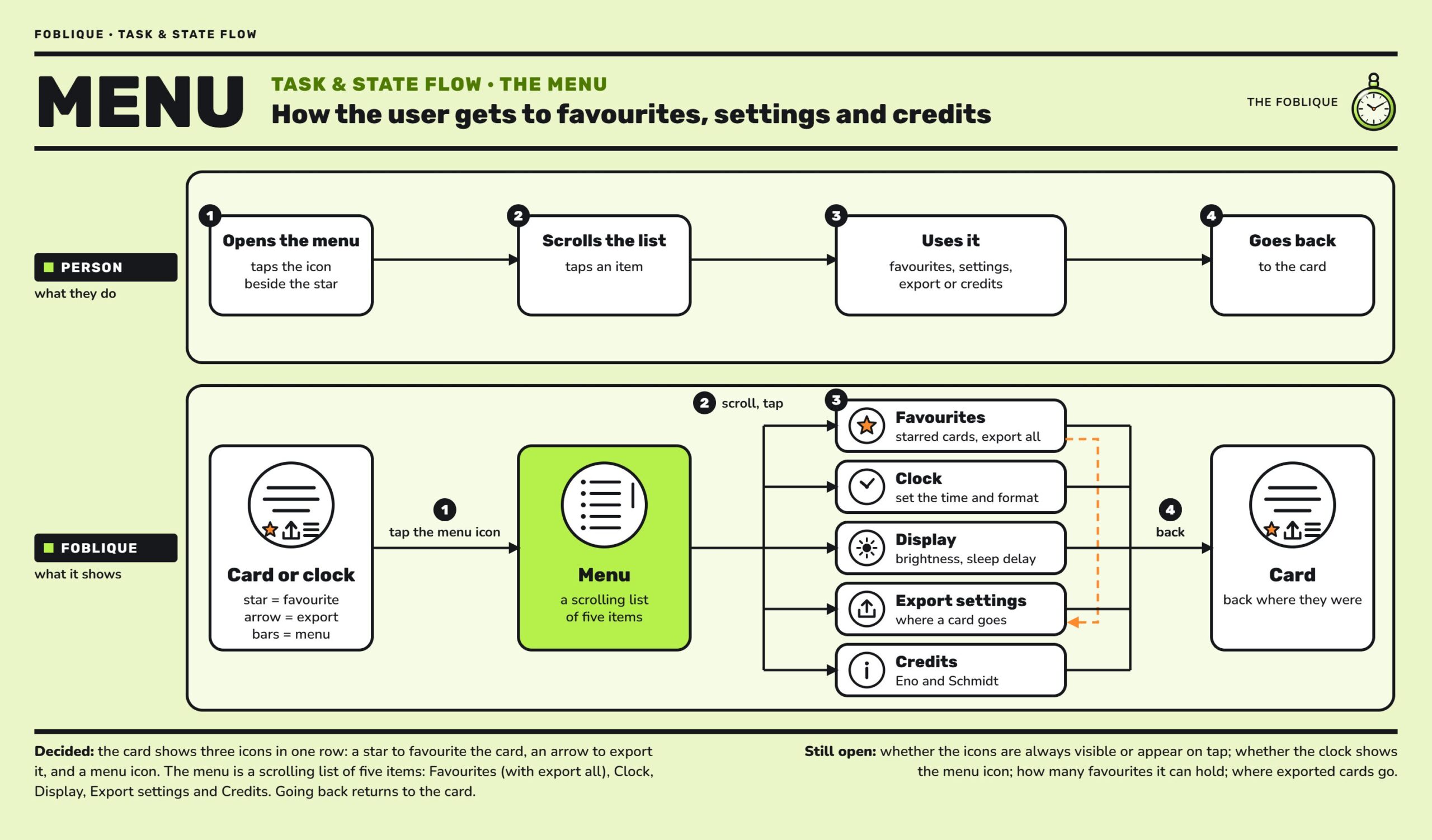
Moodboards
Early Open Questions
Design
Hardware
After researching several possible options, the round Waveshare ESP32-S3-Touch-LCD-1.28 was chosen. It’s not technically an Arduino, but it programs from the Arduino IDE, so the distinction mostly doesn’t matter and everything needed for basic prototyping is already on the board, with no extra wiring.
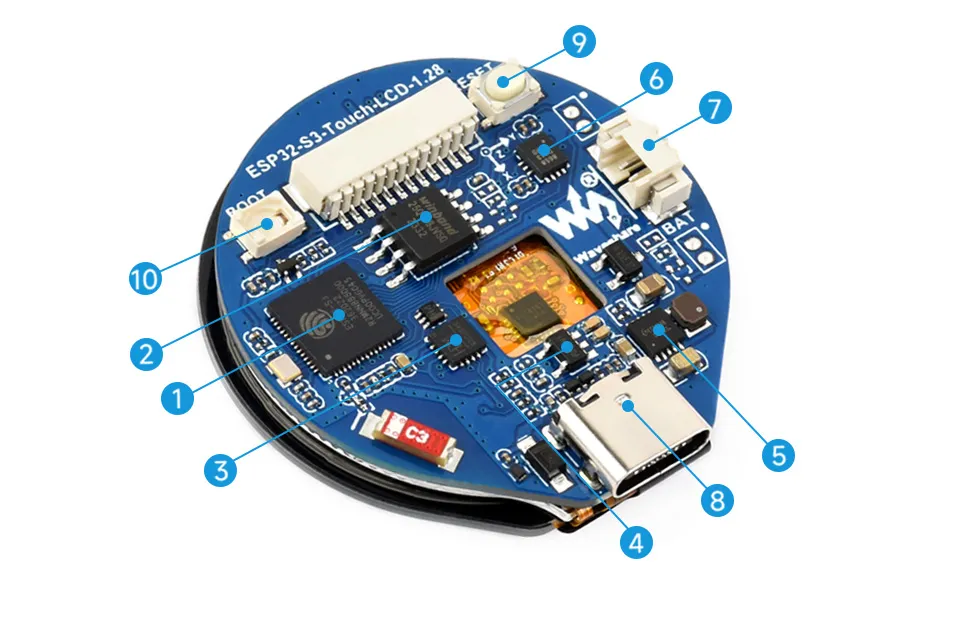
- ESP32-S3R2 / ESP32-S3RH2 Wi-Fi and Bluetooth SoC, 240MHz operating frequency, packaged with 2MB PSRAM
- W25Q128JVSIQ 16MB NOR-Flash
- CH343P USB to UART chip
- MP1605 Power module, supports up to 3.3V 2A output
- ETA6096 High-efficiency lithium battery charging chip
- QMI8658 6-axis IMU includes a 3-axis gyroscope and a 3-axis accelerometer
- MX1.25 Battery Connector MX1.25 2P connector for connecting a 3.7V lithium battery, supports charging and discharging
- USB Type-C Interface USB to serial port for program flashing and logging
- RESET Button
- BOOT Button Press and hold while resetting to enter download mode
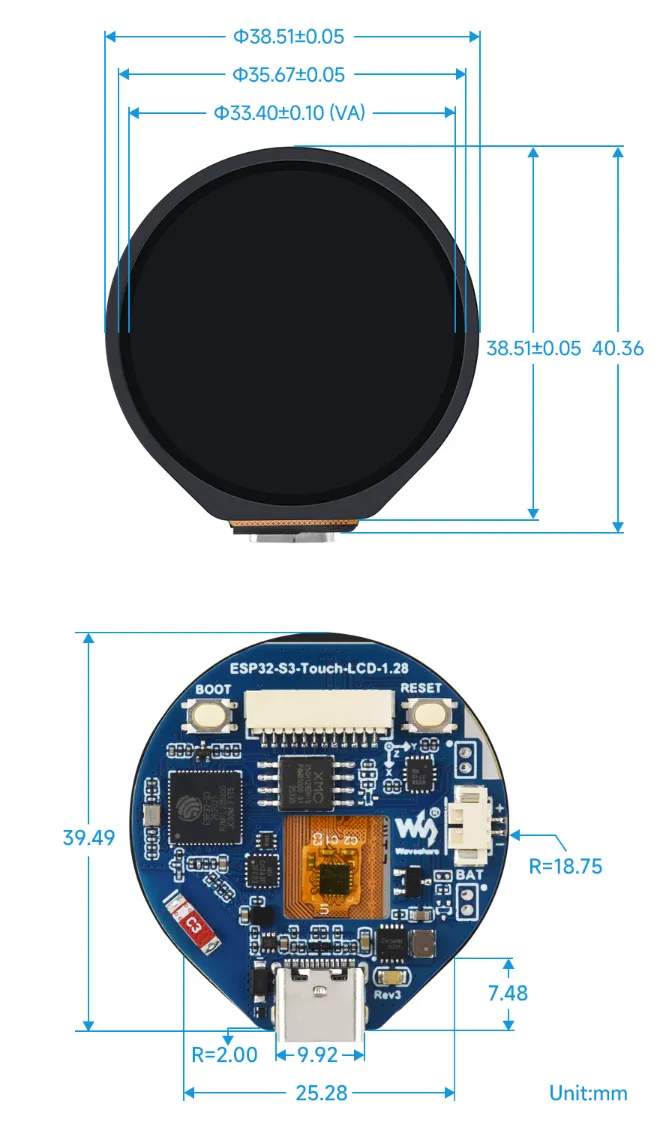 How it fits this project:
- Shake-to-wake: The onboard QMI8658 IMU has hardware motion detection, which can watch for movement on its own while the main chip sleeps and wake it up. It can also detect when the device is placed face down, giving aanother “end card” gesture to test.
- Animations: The dualcore can easily run LVGL (the standard graphics library for these screens) for smooth card transitions, and split work across the cores, for example one handling the screen while the other handles Bluetooth
- Touchscreen: It has a capacitive touch layer with built-in gesture detection (swipes, taps, long-press).
- Ending a card: The CST816S touch controller detects swipes and long-presses on its own. That allows prototyping and testing “swipe the card away” against “face down” (the IMU can detect this too) without extra hardware.
- Storage: 16 MB of flash is overkill for this. All 211 cards are maybe 8 KB of text, so this can easily include every edition, store favourites and a draw history for repeat weighting, and still have room for fonts and animations.
- Export: Bluetooth LE is built in, which settles the open “the Arduino chosen will help decide the data flow” question. Sending a card to a phone over BLE is the natural route. (The antenna needs clear space around it; metal near it weakens the signal, so the blobject aesthetic has a technical benefit too, since plastic is radio-friendly,)
- Power: The LiPo header and charger are already there, and battery voltage can be read for a low-battery screen.
Possible drawbacks:
- Long cards: Cards with a lot of text, like 147 (the peas one) or 193, may not fit at a readable size, so some cards may need scrolling or auto-shrinking text.
- Timekeeping: There’s no dedicated real-time clock chip, and users online say the ESP32’s internal clock drifts noticeably, especially across deep sleep because it relies on a low-power internal RC oscillator or a sensitive 32kHz crystal oscillator that is heavily affected by temperature changes and voltage noise.
System Architecture
Subsystems
Firmware
Internal Layout
Prototyping
Testing
Final Device

Digital Marketing
Foblique
